
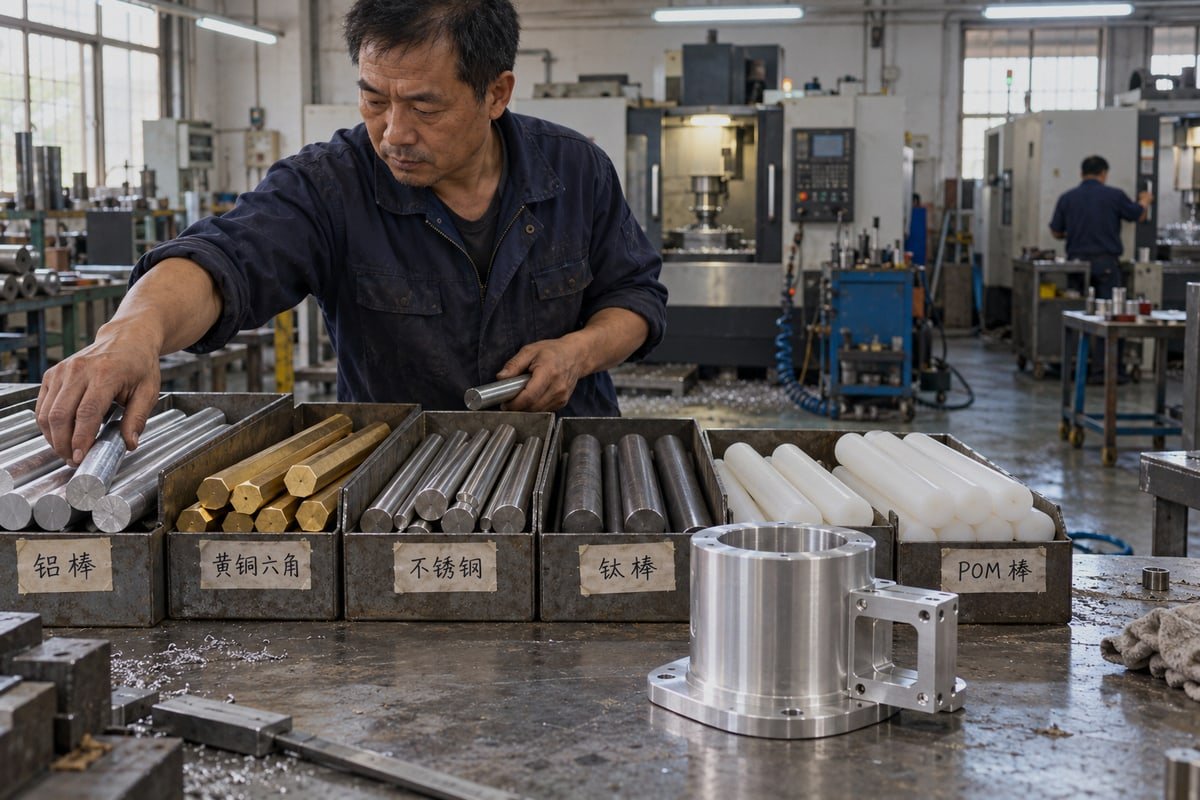
Every week, engineers send our Dongguan shop drawings asking about the best materials for high-precision CNC machining low-friction gears 1. Choose wrong, and tolerances drift, costs climb, schedules slip. Here is my answer.
The best materials for high-precision CNC machining are 6061-T6 aluminum, free-machining C360 brass, and POM for most parts. Choose 7075-T6 for higher strength, stainless steel 316 or 17-4 PH for corrosion resistance, titanium grade 5 for strength-to-weight, and PEEK for demanding plastic applications.
There is no single winner. The right material depends on what the part must do. In this guide, I will walk through how I choose, which metals and plastics I trust, and how I match them to real applications. I will also point out the mistakes I see buyers make most often.
How do I choose the right material for my high-precision CNC machined parts?
Twenty years of machining taught me one rule. If a cheaper, easier-to-cut material meets the product's performance needs, it wins. Strength on paper never beats stability on the machine.
Choose a material by starting with the operating environment and loads, then confirming it meets performance requirements. Among qualifying options, pick the lowest-cost, easiest-to-machine material. Check dimensional stability, thermal expansion coefficient, surface treatment compatibility, certification needs, and total manufacturing cost before finalizing.
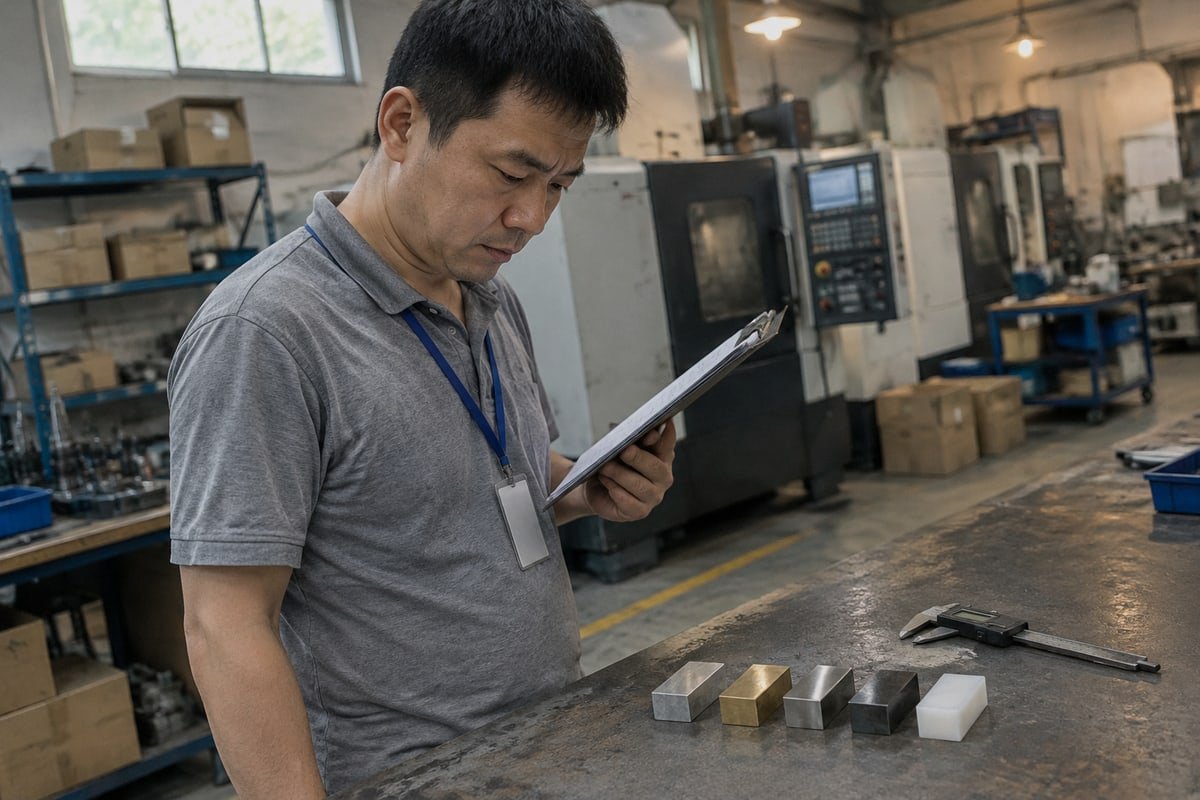
Here is the checklist our engineers run before quoting any high-precision part. We review it during DFM feedback, and it shapes every recommendation we send back to customers in Germany, the US, and Japan.
| Criterion | What we check | Why it matters for tight tolerances |
|---|---|---|
| Dimensional stability | Residual stress, heat-treatment condition, thin walls | Stock that moves after cutting cannot hold ±0.01 mm |
| Machinability rating | Cutting speed, chip behavior, burr tendency | Easier cutting means less heat and less drift |
| Thermal expansion coefficient 2 | How much the part grows per degree | Affects inspection results and assembly fit |
| Strength and stiffness | Loads, deflection, fatigue life | The part must survive service, not just inspection |
| Hardness and wear | Sliding, bearing, and tooling surfaces | Pushes the choice toward steel or bronze |
| Corrosion and chemical resistance | Washdown, salt, sterilization, solvents | Points to 316 stainless 3, titanium, or PEEK |
| Surface treatment | Anodizing, passivation, plating, polishing | Not every material accepts every finish |
| Certification | Material certs, traceability, controlled condition | Required by aerospace and medical buyers |
| Total cost | Stock price plus cycle time, tooling wear, scrap, inspection | Raw price alone misleads |
Start with the job, not the alloy
Many buyers start by naming a material. I ask them to start with the environment instead. Does the part see heat, chemicals, moisture, or sterilization? Does it carry a load or just locate another component? Does it need to be light? Does it need to insulate? Those answers remove most options fast. What remains is a short list. From that list, I pick the one that cuts cleanly and costs least. That is the whole philosophy behind our "German Quality, Asia Price" positioning. Quality comes from process control. Price comes from not over-specifying.
A ten-step decision path
- Define the operating environment: temperature, chemicals, moisture, corrosion, electrical needs.
- Define loads, stiffness, fatigue, wear, and impact.
- Decide whether low weight is essential.
- Set the tolerance, surface roughness, and feature complexity.
- Remove materials that cannot take the required surface treatment.
- Compare machinability and expected tooling wear.
- Check stock availability, certification, and material condition.
- Estimate total manufacturing cost, not stock price.
- Confirm the choice with a machinist or manufacturing engineer.
- Validate with a first article and inspection report.
Why raw material price misleads
Buyers sometimes object that material price should drive the quote. In my experience, it rarely does. Some machining guides report aluminum cutting three to five times faster than steel. That figure is approximate and depends on alloy, tooling, and geometry, but the direction is right. Cycle time, tool life, fixturing, heat treatment, finishing, and inspection often outweigh the cost of the bar stock. A cheap block of hardened steel can become an expensive part. A slightly pricier block of 6061 can become a cheap one.
Which metals offer the best accuracy and durability for my CNC machining project?
A German automation customer asked me to quote the same bracket in 6061, 304 stainless, and titanium. The titanium version cost far more and gained nothing his machine needed.
For most projects, 6061-T6 aluminum offers the best balance of accuracy, durability, and cost. Use 7075-T6 for higher loads, C360 brass for small intricate parts, 316 or 17-4 PH stainless for corrosion resistance, 4140 alloy steel for wear, and Ti-6Al-4V for extreme strength-to-weight.
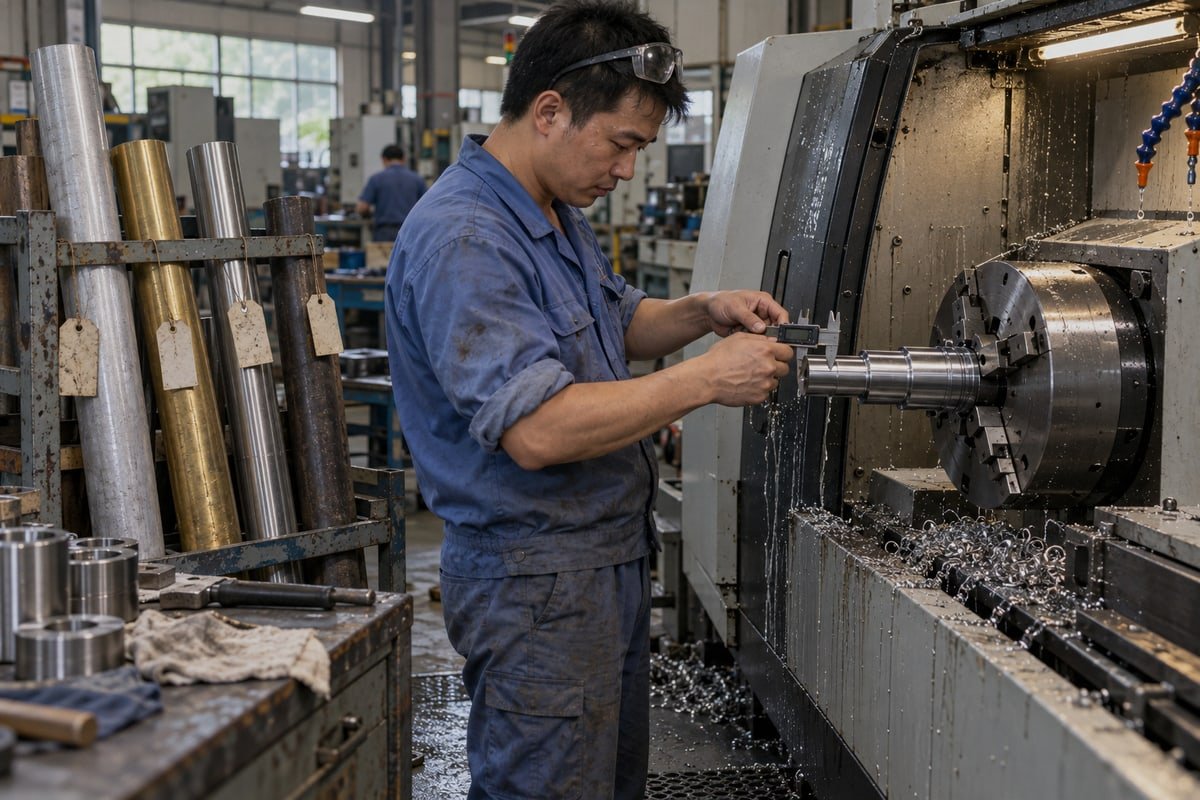
The table below reflects how we rank the metals we run on our 3-axis, 4-axis, and 5-axis machines. I rank by application, not by a single score, because a single score hides the trade-offs.
| Metal | Machinability | Strength | Corrosion resistance | Best precision use |
|---|---|---|---|---|
| 6061-T6 aluminum | Excellent | Moderate | Good, anodizes well | Housings, fixtures, brackets, optical mounts |
| 7075-T6 aluminum | Good | High | Lower than 6061 | Aerospace and robotics structural parts |
| C360 brass | Outstanding | Low to moderate | Good | Fittings, connectors, small threaded parts |
| 304 stainless | Fair, work-hardens | High | Good | Food processing, general industrial |
| 316 / 316L stainless | Fair, work-hardens | High | Excellent against chlorides | Marine, medical, chemical |
| 17-4 PH stainless | Difficult, condition-dependent | Very high after heat treatment | Good | Valves, high-load precision hardware |
| 4140 alloy steel | Good annealed, hard when treated | Very high | Needs protection | Shafts, gears, tooling |
| Ti-6Al-4V (grade 5) | Difficult | Very high | Excellent | Aerospace, implants, motorsport |
Aluminum earns the default spot
The cylindrical optical housing we machine for inspection equipment customers is 6061-T6. It needs a flat flange, a central lens bore, and dozens of small holes that line up with a bracket. Aluminum cuts fast, holds a good surface roughness, and takes anodizing. We reach 0.01 mm on those bores without fighting the material. I move to 7075-T6 only when the load case demands it. It is stronger, but it costs more, welds poorly, and resists corrosion less in some environments. Higher strength does not mean higher accuracy. Thin or asymmetric heat-treated aluminum parts can still distort from residual stress, so we plan rough and finish passes for both alloys.
Brass for small, repeatable features
C360 brass is the easiest metal we run. It produces clean chips, low cutting forces, and minimal tooling wear. For small threaded fittings and electrical connectors in high volume, it is my first choice. The trade-offs are weight and lower strength. Some grades also face regulatory limits in drinking-water applications.
Stainless is not one category
Buyers often tell me stainless steel is too difficult for precision work. That is a misconception. 304 and stainless steel 316 do work-harden, so dull tools, light feeds, and poor coolant make them worse. With rigid fixturing, correct tool geometry, and controlled feeds, we hold tight tolerances reliably. 17-4 PH is a different case. Its dimensional behavior depends on the heat-treatment sequence, so we agree on the material condition before cutting.
Steel and titanium must earn their cost
4140 shines for shafts and gears that need wear resistance. For dies and molds, tool steels like D2 and A2 can be heat-treated to extreme hardness. In both cases, the route matters: rough machine, stress-relieve or harden, then finish. Titanium grade 5 belongs with aerospace grade alloys and medical implants 4. Its low thermal conductivity concentrates heat at the cutting edge and accelerates tooling wear. It is the best choice only when strength-to-weight or biocompatibility justifies slow, careful machining.
Are engineering plastics a good option when I need tight tolerances in CNC machining?
One Dongguan summer, POM guide blocks measured in spec at the machine but slightly over in our warmer inspection room. The plastic had not failed. Temperature had moved it.
Yes. Engineering thermoplastics like POM and PEEK can hold tight tolerances when the design accounts for thermal expansion, moisture absorption, and creep. POM suits low-friction gears and guides, PEEK handles chemical and heat exposure, while PTFE, nylon, and polycarbonate fit narrower roles.
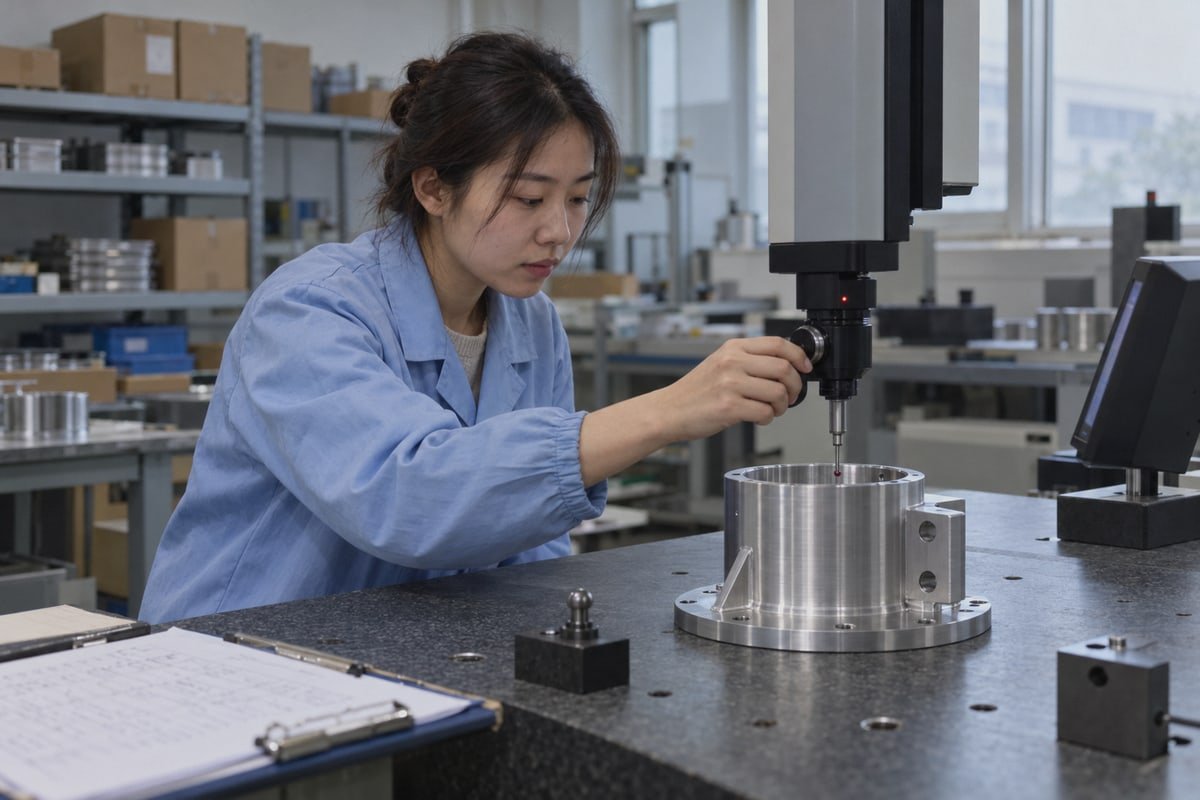
Plastics are a growing share of what we machine for medical, semiconductor, and electronics customers. They remove weight, insulate electrically, and resist chemicals that attack metals. But precision in plastic is a different discipline. Here is how I compare the grades we stock.
| Plastic | Machinability | Dimensional stability | Key strength | Watch out for |
|---|---|---|---|---|
| POM (Delrin) | Excellent | Good for a plastic | Low friction, stiffness, wear | Thermal expansion, moderate temperature limit |
| PEEK | Fair, slow | Good with stress control | Heat, chemicals, strength | High cost, residual stress |
| PTFE | Fair, soft | Poor under load | Chemical resistance, insulation | Creep, difficult to hold tolerances |
| ナイロン | Good | Moderate | Toughness, wear | Moisture absorption changes size |
| Polycarbonate | Good | Moderate | Impact resistance, transparency | Machining stress, surface damage |
| ABS | Excellent | Moderate | Low cost | Weak for precision, load, or heat |
| UHMW-PE | Fair, soft | Poor | Wear, low friction | Too soft for tight tolerances |
What precision really means for plastics
A tolerance on the drawing is only half the story. The thermal expansion coefficient of POM is several times that of aluminum, so a part that passes in a cool room can read differently in a warm assembly plant. Nylon absorbs moisture and grows. PTFE creeps under sustained load. When buyers tell me plastics cannot hold tight tolerances, I disagree, but I add a condition. The tolerance strategy must include the service environment. We agree on an inspection temperature, allow parts to normalize before measuring, and design clearances around expected movement.
POM versus PEEK
POM is my default plastic. It cuts cleanly, finishes well, and resists melting at proper speeds. Gears, bushings, rollers, and guides come out accurate and repeatable. PEEK is the premium option. It survives sterilization, aggressive chemicals, and elevated temperatures, and it can replace metal where insulation or low mass matters. It also costs far more and machines slower, so I recommend it only when the operating conditions demand it. That follows the same rule as metals: meet the performance need, then choose the cheaper, easier material.
How we keep plastic parts accurate
We use sharp, polished tools to keep heat low. We hold thin sections with low clamping force so they do not spring back. We rough, rest, and finish PEEK to release stress. Then we inspect after the part has reached room temperature. Those steps let us ship engineering thermoplastics that assemble correctly on the first try.
What factors should I consider when matching material properties to my part's application?
The trade-off I weigh most often is corrosion resistance against machining time. A food-processing customer needs washdown durability, so 316 stainless makes sense. A sensor housing indoors does not.
Match material to application by weighing operating temperature, chemical exposure, load and fatigue, wear, weight limits, electrical needs, surface roughness targets, surface treatment compatibility, and certification. Then compare machinability rating and total cost. The right material meets every functional need at the lowest stable manufacturing cost.
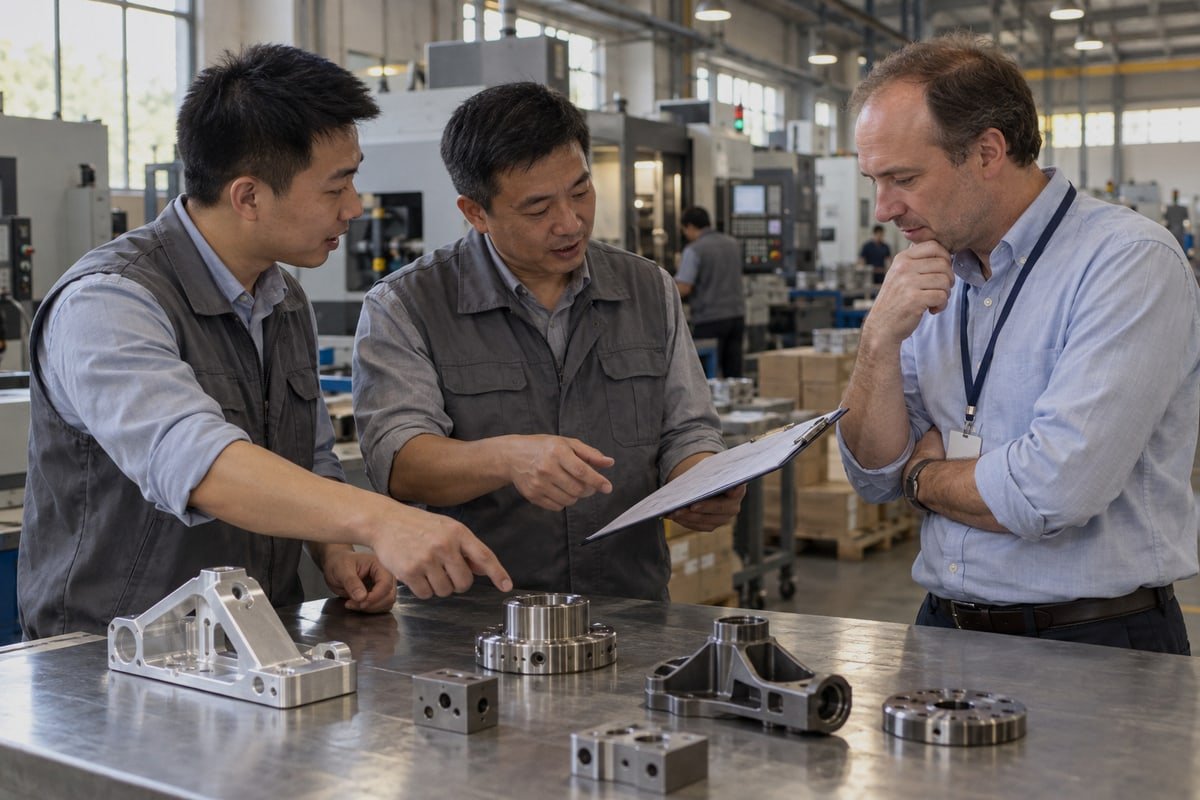
When customers upload drawings to us, the DFM review often ends with a material change. Not a downgrade in function, but a shift to something that cuts better and costs less for the same job. Here is the mapping I use most often.
| Application | First choice | Upgrade when | Reason for the upgrade |
|---|---|---|---|
| Aerospace structure | 7075-T6 aluminum | Ti-6Al-4V | Higher temperature or strength-to-weight demands |
| Medical instrument | 316L stainless | 17-4 PH or titanium grade 5 | Higher load, or implant biocompatibility |
| Electronics housing | 6061-T6 aluminum | POM or PEEK | Electrical insulation or chemical exposure |
| Food processing | 304 stainless | 316 stainless | Chlorides or aggressive cleaning agents |
| Robotics arm | 6061-T6 aluminum | 7075-T6 | Deflection under dynamic load |
| Marine hardware | 316 stainless | Bronze | Bearing or sliding wear in salt water |
| Gears and bushings | POM | 4140 steel or bronze | Load, speed, or temperature exceed plastic limits |
| Fixtures and mold bases | 6061-T6 aluminum | 4140, D2, or A2 tool steel | Wear life and heat-treated hardness |
| Optical mounts | 6061-T6 aluminum | Thermal-expansion-matched materials | Tolerance must hold across temperature swings |
| Electrical contacts | C360 brass | 銅 | Maximum conductivity |
Mistakes I see most often
The first mistake is over-specifying titanium. It is excellent, but for an ordinary bracket it adds cost, slows delivery, and buys nothing. The second is ignoring heat treatment. A 4140 part machined to final size and then hardened will not stay in tolerance. The third is forgetting plastic environmental behavior. The fourth is picking by stock price alone. Each of these fails the same test: the material does not match the job, so the process becomes unstable and expensive.
Surface treatment and certification
I always ask about finishing early. 6061 anodizes beautifully; 7075 anodizes with a different appearance. Stainless passivates. Steel needs plating or black oxide for corrosion protection. Plastics skip most of this but may need polishing for surface roughness targets. For aerospace and medical buyers, I also ask about material certificates 5 and traceability. Our ISO 9001:2015 6 system lets us supply material certs, first article inspection, and dimensional reports with every shipment. Buyers who have been burned by substituted 304 for 316 understand why that matters.
Emerging material trends worth watching
Thermal-expansion-matched material engineering is becoming important for multi-part assemblies that must stay accurate across temperature changes. Magnesium-zirconium damping alloys appear in sensor housings to absorb micro-vibration. High-entropy alloys are being explored for nuclear and deep-space parts. Bio-resorbable WE43 magnesium is being machined for temporary implants. Ceramics and carbon-fiber composites also appear in specialized work, though ceramics need grinding and composites abrade tools fast. These are boundary cases, not everyday recommendations. Hybrid design is more practical: use a metal insert, a coating, or a plastic sub-component exactly where each material's advantage counts.
Conclusion
Overspecifying material wastes money and risks tolerances. Start with 6061-T6, C360 brass, or POM, and upgrade only when the application demands it. Send us your drawing for DFM feedback.
Footnotes
1. Technical overview of gear mechanisms and materials used for low-friction industrial applications. ↩︎
2. NIST provides authoritative data on material properties and thermal expansion measurements. ↩︎
3. Technical specifications for 316 grade stainless steel and its corrosion resistance properties. ↩︎
4. FDA regulatory information regarding the safety and standards of materials in medical implants. ↩︎
5. Information on international trade documentation and material certification requirements for manufacturing. ↩︎
6. Official ISO standard for quality management systems in manufacturing environments. ↩︎

 日本語
 English
 Italiano
 Français
 Deutsch (Sie)
 Español
 Русский
 العربية
 Български
 Čeština
 Dansk
 Suomi
 עִבְרִית
 हिन्दी
 Nederlands
 Português
 Română
 Slovenčina
 Svenska
 ไทย
 Tiếng Việt
 Türkçe
 Slovenščina