
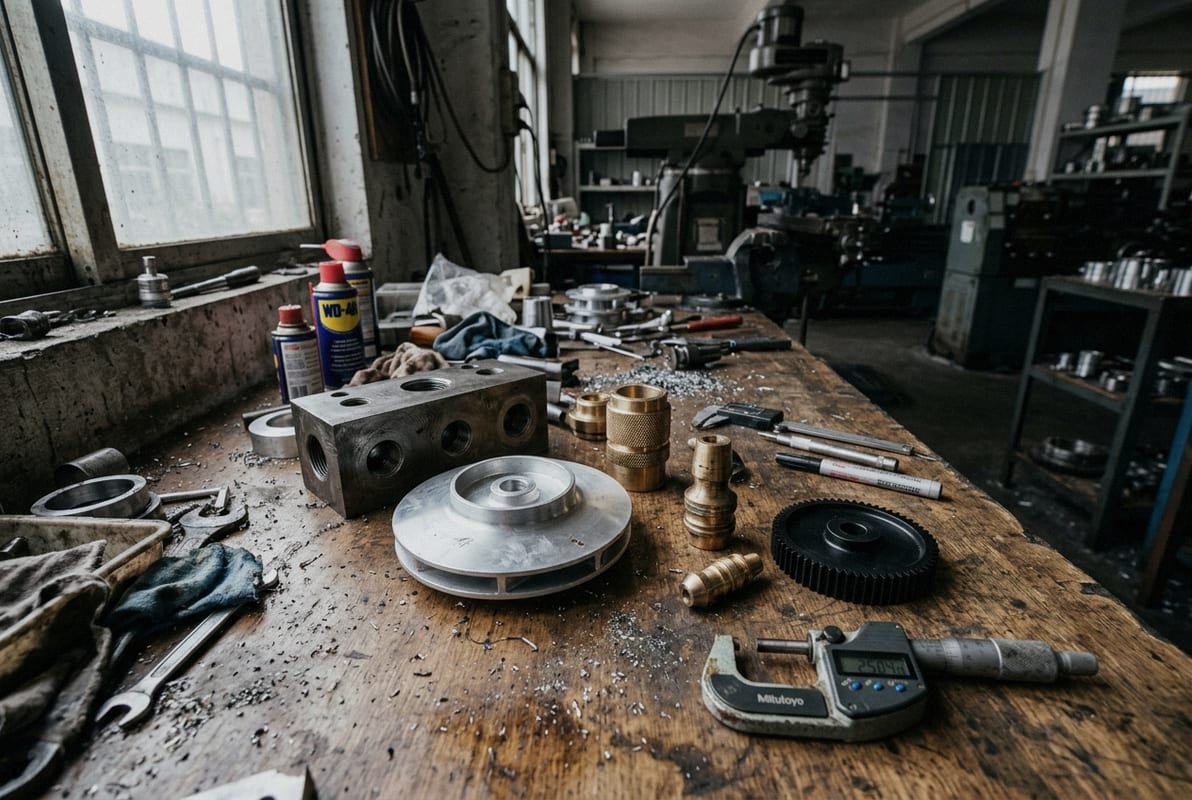
Choosing the wrong material for precision CNC machining 1 can wreck a project — wasted budget, failed parts, and missed deadlines. I’ve seen it happen dozens of times on our shop floor in Dongguan over the past twenty years.
The best materials for precision CNC machining include aluminum alloys (6061, 7075), stainless steel grades (304, 316), titanium alloys (Ti-6Al-4V), brass, copper, tool steel, and engineering plastics like PEEK, Delrin, and nylon. The ideal choice depends on your part application requirements, budget, and performance needs.
There is no single “best” material. Every project brings a unique mix of strength demands, weight limits, corrosion exposure, and cost targets titanium alloys 2. This guide breaks down the leading metals and plastics we machine daily so you can match the right material to your exact needs.
How do I choose the right metal or plastic for my specific application?
A buyer from the US once sent us a drawing with no material callout — just a note that said "something strong and light." That single conversation taught me how critical it is to ask the right questions before picking a material.
To choose the right metal or plastic, define your part's operating environment first — consider mechanical load, temperature, chemical exposure, weight limits, and required tolerances. Then match those requirements against each material's properties, machinability rating, and cost to find the optimal balance.
Start with Application Requirements
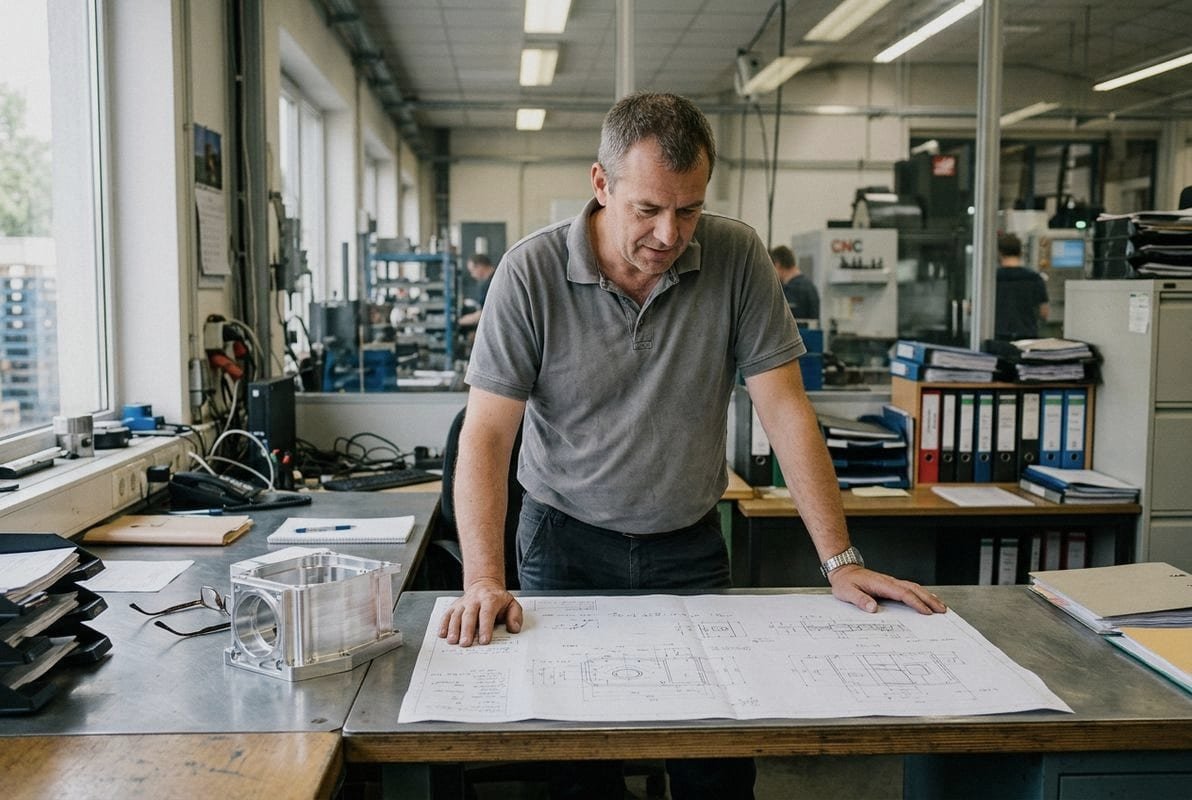
The first question I always ask a customer is: "What does this part do?" A housing for a food-processing machine needs corrosion resistance 3 above all else. A bracket inside an aerospace assembly demands a high strength to weight ratio 4. A gear in an automation system calls for wear resistance and dimensional stability.
Here is a simple decision framework we use internally when reviewing new projects:
- Define the environment. Will the part face moisture, chemicals, extreme heat, or UV exposure?
- Identify the load type. Is it static, dynamic, impact, or cyclic fatigue?
- Set the tolerance band. Tight tolerances (±0.01 mm or less) narrow your material choices.
- Establish the budget. Titanium machining costs far more per hour than aluminum.
- Consider post-processing. Some materials anodize, plate, or polish better than others.
Metal vs. Plastic: A Quick Comparison
Many engineers default to metal. But in our experience exporting to the US and Europe, we see a growing trend of plastic-for-metal substitution — especially when parts involve moisture, motion, or electrical insulation.
| Factor | Metals (Aluminum, Steel, Titanium) | Plastics (PEEK, Delrin, Nylon) |
|---|---|---|
| Strength | High to very high | Low to moderate |
| Weight | Moderate to heavy | Very light |
| Corrosion resistance | Varies by grade | Generally excellent |
| Thermal conductivity 5 | High (especially copper, aluminum) | Low |
| Machinability | Good to difficult | Generally easy |
| Cost per part | Moderate to high | Low to high (PEEK is expensive) |
| Typical tolerance | ±0.005–0.02 mm | ±0.02–0.05 mm |
When Metals Win
Metals are the right call when parts carry heavy structural loads, operate at high temperatures, or need superior surface finish requirements for sealing or mating surfaces. Stainless steel grades 6 like 316 excel in marine and medical environments. Aluminum alloys 7 like 7075 are the go-to for aerospace frames. And nothing beats copper alloys for thermal conductivity in heat sinks or electrical connectors.
When Plastics Win
Plastics shine when weight reduction, electrical insulation, or chemical inertness is the priority. Delrin (POM) machines beautifully and holds tight tolerances for gears and bushings. PEEK handles temperatures above 250 °C and resists nearly every chemical. Nylon offers good wear resistance at a fraction of the cost.
The key takeaway: never pick a material in isolation. Match it to the full picture of your part's life — from machining through assembly to end use.
Which CNC machining materials offer the best balance between cost and performance for my project?
Last quarter, we quoted a project for an automation company that initially spec'd titanium for a set of internal brackets. After our DFM review, we suggested switching to 7075 aluminum. The result: 60% lower machining cost, faster delivery, and the parts performed perfectly in service.
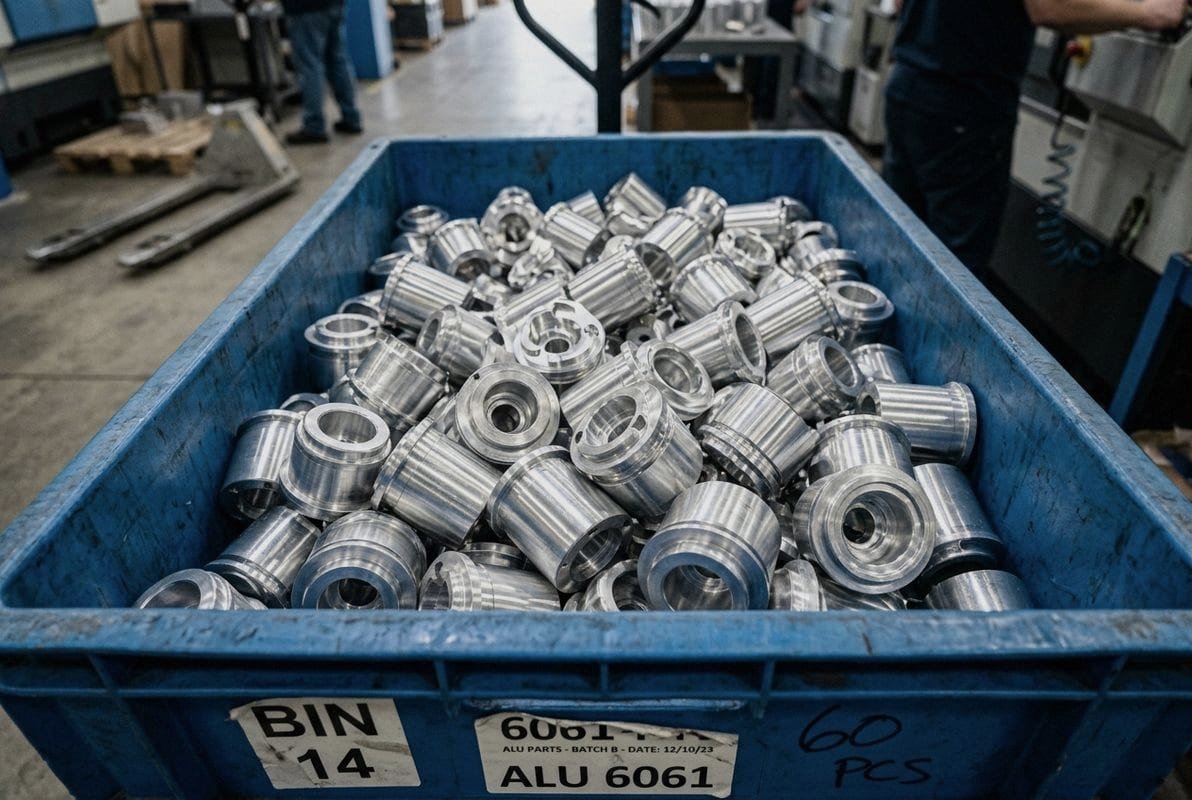
Aluminum 6061, carbon steel 1045, brass C360, and Delrin (Acetal) consistently deliver the best balance between cost and performance. They machine quickly, hold good tolerances, produce excellent surface finishes, and keep tooling wear low — all of which reduce your per-part cost without sacrificing quality.
The Cost Drivers in CNC Machining
Material cost is only part of the equation. The real cost per part is driven by three things: raw material price, machining time, and tool wear. A cheap material that is hard to cut can end up costing more than an expensive material that machines fast.
For example, titanium alloy Ti-6Al-4V has a raw material cost roughly five to eight times that of aluminum 6061. But the machining time can be three to four times longer because of titanium's low thermal conductivity and tendency to work-harden. The total cost gap widens dramatically.
Cost-Performance Ranking of Common Materials
| Материал | Raw Material Cost | Machinability Rating | Tool Wear | Typical Use Cases |
|---|---|---|---|---|
| Aluminum 6061 | Low | Excellent | Low | General structural parts, housings, brackets |
| Aluminum 7075 | Moderate | Good | Low–Moderate | Aerospace brackets, high-strength fixtures |
| Carbon Steel 1018/1045 | Low | Good | Moderate | Shafts, pins, machinery components |
| Stainless Steel 304 | Moderate | Moderate | Moderate–High | Food equipment, medical housings |
| Stainless Steel 316 | Moderate–High | Moderate | High | Marine fittings, chemical processing |
| Brass C360 | Moderate | Excellent | Very low | Electrical connectors, fittings, valves |
| Titanium Ti-6Al-4V | High | Difficult | Very high | Aerospace critical parts, medical implants |
| Delrin (POM) | Low | Excellent | Very low | Gears, bushings, conveyor guides |
| PEEK | Very high | Good | Low | Aerospace seals, medical instruments |
| Nylon (PA6/PA66) | Low | Good | Low | Wear pads, rollers, low-load gears |
The Sweet Spot Materials
On our production line, we machine more aluminum 6061 and Delrin than any other materials combined. They are the workhorses. The reason is simple: they cut fast, they hold tolerances well, and they don't destroy tooling. For clients who need higher strength but still want cost control, we steer them toward 7075 aluminum or alloy steel 4140.
Brass C360 deserves special mention. It is one of the most machinable metals available. We can run higher feed rates, which cuts cycle time. For intricate electrical components or fluid fittings, brass is often the most economical path to a precision part.
When Premium Materials Are Justified
Titanium and PEEK are expensive, but sometimes they are the only option. Biocompatibility requirements in medical implants demand titanium. Extreme temperature resistance in aerospace seals demands PEEK. In those cases, performance is non-negotiable, and the higher cost considerations are simply part of the project budget.
The lesson I've learned after two decades: always question the spec. If a less expensive material can meet every functional requirement, switching saves money without any engineering compromise. That is exactly the kind of DFM feedback our team provides on every new project.
What are the most reliable materials for achieving tight tolerances in my high-precision parts?
When we calibrate our 5-axis machines for a ±0.005 mm tolerance job, the material on the table matters just as much as the machine itself. I remember a job where a client insisted on PTFE for a seal component at ±0.01 mm. We warned them. The material flexed under tool pressure, and it took three iterations to lock in a viable process.
Aluminum 6061, brass C360, stainless steel 303/304, and Delrin (Acetal) are the most reliable materials for tight tolerances. They resist warping, maintain dimensional stability during cutting, and produce consistent results across production runs — making them ideal for high-precision CNC machining.
Why Some Materials Hold Tolerances Better Than Others
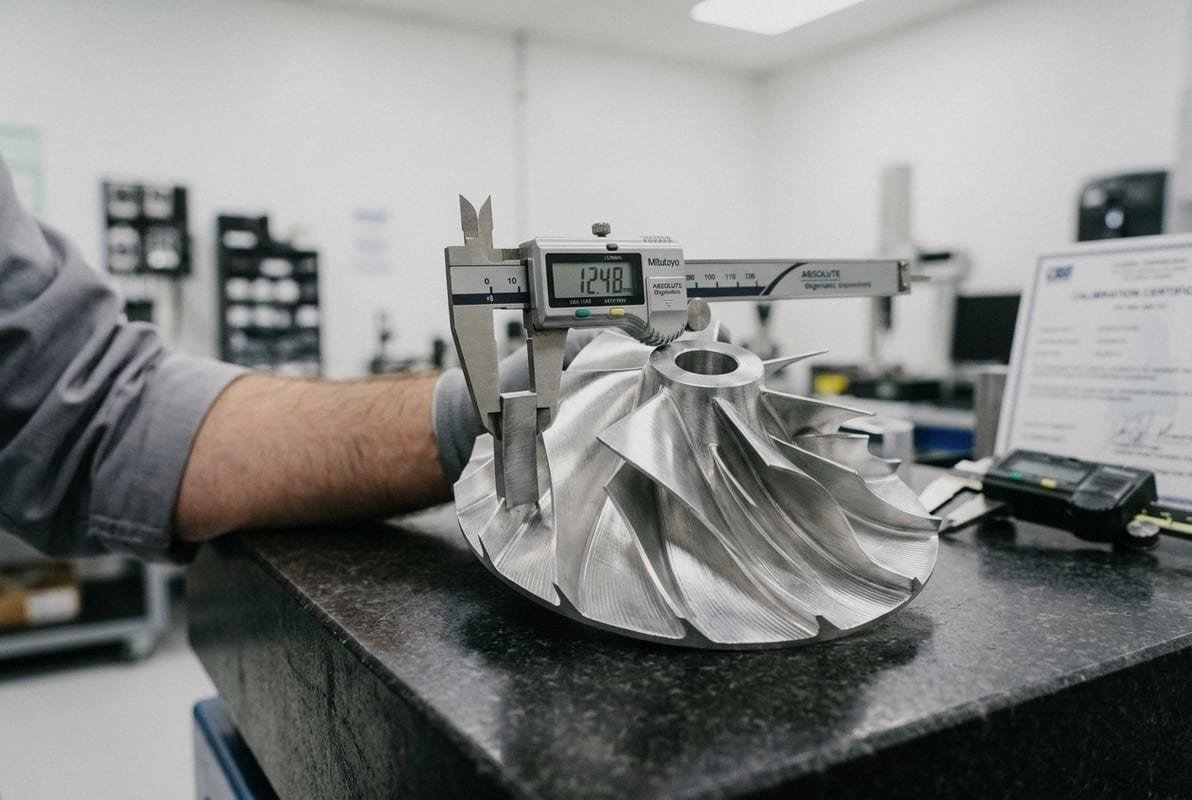
Dimensional stability during machining depends on several material properties: stiffness, thermal expansion rate, internal stress levels, and how the material responds to cutting forces. Soft or flexible materials deflect under the tool. Materials with high thermal expansion grow as they heat up from cutting friction. Materials with residual stress warp after material is removed.
A Tolerance-Holding Guide
Here is how the most common CNC materials rank for tolerance reliability based on what we see across thousands of jobs every year:
| Материал | Achievable Tolerance | Dimensional Stability | Key Concern |
|---|---|---|---|
| Aluminum 6061-T6 | ±0.005 mm | Excellent | Minimal — very predictable |
| Aluminum 7075-T6 | ±0.005 mm | Excellent | Slightly harder, still very stable |
| Brass C360 | ±0.005 mm | Excellent | None — one of the best for precision |
| Stainless Steel 303 | ±0.008 mm | Very good | Work hardening at high speeds |
| Stainless Steel 304 | ±0.01 mm | Good | Higher tool wear, more heat buildup |
| Tool Steel D2 (hardened) | ±0.008 mm | Good | Requires slow feeds, rigid setup |
| Titanium Ti-6Al-4V | ±0.01 mm | Good | Springback, heat concentration |
| Delrin (POM) | ±0.01 mm | Very good | Best plastic for tolerances |
| PEEK | ±0.02 mm | Good | Expensive, but stable |
| Найлон | ±0.03–0.05 mm | Moderate | Absorbs moisture, can swell |
| PTFE (Teflon) | ±0.05 mm+ | Poor | Soft, deforms under cutting forces |
The Metals That Excel
Aluminum alloys — especially 6061-T6 and 7075-T6 — are the gold standard for tight-tolerance machining. They are stiff enough to resist deflection, they generate manageable heat during cutting, and they don't have significant residual stress in the tempered condition. On our floor, most aerospace and optical parts are aluminum for this exact reason.
Brass C360 is equally impressive. Its free-cutting nature allows high spindle speeds with minimal tool pressure, which means less deflection and more consistent dimensions. We machine a lot of brass electrical connectors that demand ±0.005 mm on bore diameters, and they pass inspection batch after batch.
Stainless steel 303 is the precision-friendly alternative to 304. The added sulfur makes it machine more predictably. For medical device housings and food-equipment components, 303 gives us the corrosion resistance of stainless with much better machinability.
The Plastics That Hold Up
Among engineering plastics, Delrin stands alone for tolerance work. Its crystalline structure gives it high stiffness and low moisture absorption. That means the dimensions don't shift after machining or during storage. We often recommend Delrin for bearing inserts, guide rails, and precision gear blanks.
PEEK holds tolerances reasonably well, but its high cost means we only use it where its temperature and chemical resistance are actually needed. For general-purpose plastic precision parts, Delrin is almost always the better choice.
Nylon is a caution case. It absorbs moisture from the air, which causes it to swell. For parts that need to stay within ±0.02 mm over time, nylon can be problematic unless the environment is tightly controlled or a moisture-resistant grade is selected.
The Process Side Matters Too
Material selection is half the battle. Fixturing, tool selection, coolant strategy, and feed-rate optimization all play a role. Our engineers review every high-tolerance job with a DFM lens, looking at how the material will behave under our specific cutting conditions. That feedback loop — between material properties and machining strategy — is where true precision comes from.
How can I get professional DFM feedback to ensure my material choice is optimized for manufacturing?
One conversation changed a project's outcome completely. A European client sent us a 3D model for an impeller — similar to the radial turbine wheels we regularly machine from aluminum — with a material callout of Inconel 718. After reviewing the part's actual operating temperature and load, our engineering team suggested Ti-6Al-4V instead. It saved two weeks of machining time and cut the unit cost by nearly half.
To get professional DFM feedback, send your 2D/3D drawings and technical specifications to an experienced CNC machining partner. A qualified team will analyze your design for manufacturability, recommend optimal materials, flag tolerance risks, and suggest cost-saving modifications — all before cutting begins.

What DFM Feedback Covers
DFM — Design for Manufacturing 9 — is not just a buzzword. It is a structured review process that bridges the gap between design intent and shop-floor reality. When our team at stcncmachining receives a new project, the DFM review addresses:
- Material suitability. Does the chosen material match the part's functional requirements, or is there a better option?
- Tolerance feasibility. Are the called-out tolerances achievable in the selected material? Where should critical tolerances be applied vs. general tolerances?
- Feature machinability. Can the geometry be machined efficiently? Are there thin walls, deep pockets, or sharp internal corners that need redesign?
- Surface finish requirements. Is the specified finish realistic for the material and geometry? Does it add unnecessary cost?
- Cost optimization. Are there simple design changes — like adjusting a fillet radius or relaxing a non-critical tolerance — that can reduce cycle time?
How the DFM Process Works with Us
The process is straightforward. A client uploads their drawings or 3D files through our website at www.stcncmachining.com or emails them to our team. Within 24 hours, our engineers review the design and return a DFM report. This report includes material recommendations, tolerance notes, machining strategy, estimated lead time, and a transparent quotation.
We provide this feedback on every project — prototypes, low-volume runs, and mass production orders alike. It is built into how we operate. For clients who are still deciding on a material, we often prepare quotes for two or three material options side by side so they can compare cost, lead time, and performance directly.
Why DFM Saves Money and Time
I have seen clients save 20–40% on unit cost just by making small design changes suggested during DFM. A wall thickness increase from 0.5 mm to 0.8 mm can eliminate the need for special fixturing. Switching from 316 stainless to 304 — when the corrosion environment allows — can drop material cost and machining time simultaneously.
DFM also prevents quality failures. If a material is prone to warping at the tolerances called out, we flag it before production. If a surface finish spec is unrealistic on a particular alloy, we suggest alternatives. This front-end investment in review eliminates rework, scrap, and delays on the back end.
What to Send Your CNC Partner
To get the best DFM feedback, include the following with your inquiry:
- 2D drawings (PDF or DWG) with GD&T callouts
- 3D model files (STEP, IGES, or SolidWorks)
- Material specification (or ask for a recommendation)
- Quantity requirements (prototype, low-volume, or mass production)
- Surface finish and post-processing requirements
- Application context (what the part does, the operating environment)
The more context we have, the better our recommendations. Our 20 years of CNC machining experience — across aluminum alloys, stainless steel grades, titanium, copper, brass, magnesium alloy, and dozens of engineering plastics — means we have likely machined something very similar to your part before. That experience translates directly into practical, actionable DFM advice.
Our ISO 9001:2015 certified 10 facility supports 3-axis through 5-axis machining with tolerances down to ±0.005 mm. Whether you need a single prototype in five days or a production run of 10,000 pieces, the DFM process ensures your material choice and design are optimized from day one.
Заключение
The right material for your precision CNC machining depends on balancing strength, weight, corrosion resistance, tolerances, and budget. Use this guide as your starting point — and reach out to our team at stcncmachining for expert DFM feedback tailored to your project.
Footnotes
1. Explains the process, equipment, materials, advantages, and applications of precision CNC machining. ↩︎
2. Replaced with a comprehensive and authoritative Wikipedia article on titanium alloys. ↩︎
3. Defines corrosion resistance and its importance in material selection and longevity. ↩︎
4. Replaced with an authoritative Wikipedia article defining specific strength, also known as strength-to-weight ratio. ↩︎
5. Defines thermal conductivity and its fundamental role in material design and heat transfer. ↩︎
6. Replaced with a comprehensive and authoritative Wikipedia article covering stainless steel, including its grades. ↩︎
7. Replaced with a comprehensive and authoritative Wikipedia article on aluminum alloys. ↩︎
8. Details the properties and applications of various engineering-grade plastics. ↩︎
9. Outlines DFM strategies to simplify fabrication, reduce costs, and maintain high quality. ↩︎
10. Provides an overview of the ISO 9001:2015 standard for quality management systems. ↩︎

 Български
  English
  Italiano
  Français
  日本語
日本語  Deutsch (Sie)
  Español
  Русский
  العربية
  Čeština
  Dansk
Dansk  Suomi
Suomi  עִבְרִית
  हिन्दी
  Nederlands
  Português
  Română
  Slovenčina
  Svenska
  ไทย
ไทย  Tiếng Việt
  Türkçe
  Slovenščina