
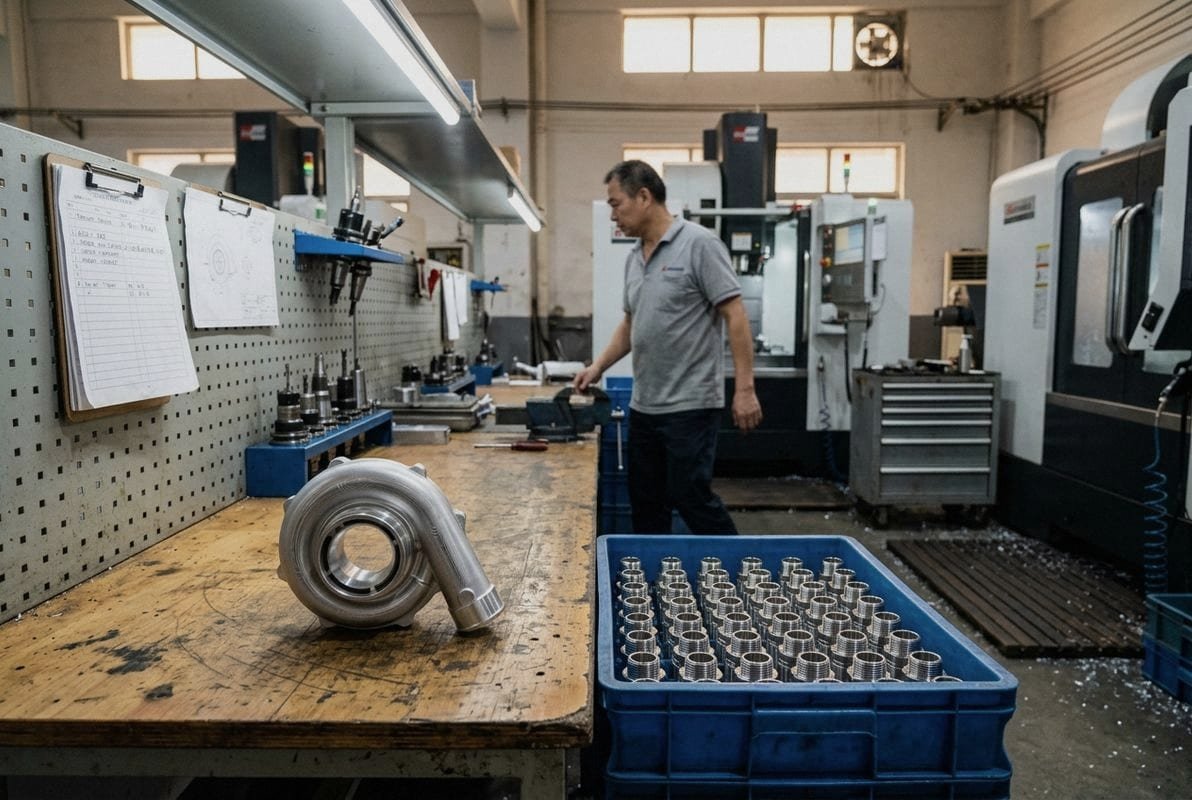
Every week, our quoting team fields the same question from buyers overseas: “Should I order five samples first, or jump straight into a thousand pieces?” The wrong answer costs real money — wasted tooling, blown timelines, or parts that look great as prototypes but drift out of spec the moment production volume climbs.
Choosing between CNC prototyping and mass production depends on your order volume, tolerance requirements, lead time, and project stage. Generally, CNC prototyping suits runs under 1,000 parts for fast validation, while mass production is cost-effective above 10,000 units where tooling and process optimization pay off.
Below, I break down the key decision points — volume thresholds, cost crossovers, supplier selection, and tolerance control — so you can source with confidence at every stage of the product development lifecycle.
How do I calculate the break-even point between CNC prototyping and mass production for my parts?
A U.S. automation customer once sent us an RFQ for 3,000 aluminum housings design for manufacturability 1. He assumed injection molding 2 would be cheaper, but the mold alone quoted at $18,000. That one conversation changed his entire sourcing plan — and it started with a break-even calculation Thermal expansion 3.
To find the break-even point, add up the fixed costs of mass production tooling and divide by the per-unit savings compared to CNC prototyping. When total CNC cost equals total mass-production cost at a given quantity, that quantity is your break-even point — typically between 500 and 5,000 parts depending on complexity.
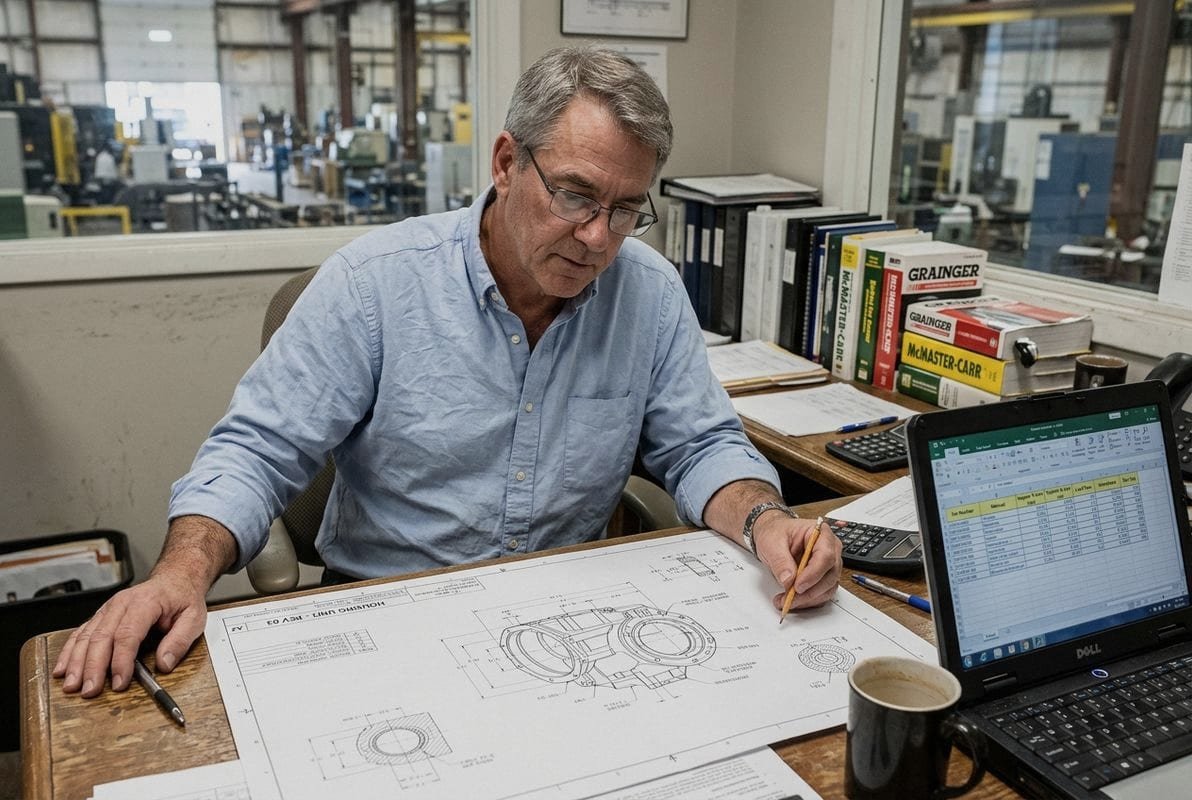
Understanding the cost structure
The cost of CNC prototyping 4 is mostly variable. Each part requires machine time, material, and operator attention. Setup fees are spread across very few parts, so per-unit cost stays high. Machining cost per hour ranges from $30 to $200 depending on machine type, material, and region.
Mass production flips this. You pay heavy upfront costs — mold design, fixture fabrication, process validation — but per-unit cost drops dramatically as production volume increases. The key insight: this relationship is not linear. Going from 100 to 1,000 parts does not cut your unit price by 10×. You also invest in fixture design, thermal stabilization, CNC program optimization, and process controls.
A simple break-even formula
Here is how I explain it to our buyers:
Break-even quantity = Fixed tooling cost ÷ (CNC unit cost − Mass production unit cost)
If a CNC prototype costs $45 per part and mass production costs $12 per part after a $15,000 tooling investment:
$15,000 ÷ ($45 − $12) = ~455 parts
Below 455 parts, CNC prototyping is cheaper. Above it, mass production wins.
Volume threshold guidelines
| Volume Range | Recommended Approach | Why |
|---|---|---|
| 1–50 parts | CNC prototyping or 3D printing 5 | No tooling cost; fast turnaround; ideal for design iteration |
| 50–1,000 parts | CNC prototyping / low volume manufacturing | Tooling rarely justified; CNC still cost-competitive |
| 1,000–10,000 parts | Gray zone — evaluate carefully | Depends on part complexity, tolerances, material; consider rapid production CNC |
| 10,000+ parts | Mass production (injection molding, die casting, etc.) | Tooling cost amortized; per-unit cost drops significantly |
What about 3D printing?
For very small batches — say, one to four parts — 3D printing can beat CNC on speed and cost. But once you need five or more high-quality prototypes with real mechanical properties, CNC prototyping becomes more cost-effective. 3D-printed parts often lack the strength, surface finish, and dimensional accuracy needed for functional testing. On our shop floor, we see buyers start with a 3D-printed concept model, then move to CNC for anything that has to survive a load test or mate with another component.
The hidden costs people miss
Many procurement teams look only at quoted unit price. They forget about cost analysis items 6 like incoming inspection rework, assembly issues from loose tolerances, and delays from tooling revisions. When we run a DFM review before quoting, we flag features that will balloon cost at scale — deep pockets, unnecessarily tight tolerances, exotic materials where standard alloys would work. That review alone can shift the break-even point by hundreds of parts.
Is my current prototype design actually optimized for cost-effective mass production?
One lesson I learned early in our Dongguan facility: a prototype that machines beautifully in a single setup can become a nightmare in batch production. A European medical device client sent us a stainless steel fitting that required four re-clampings. The sample was perfect. But when they ordered 2,000 pieces, the accumulated setup time and positional error made the project nearly unprofitable — for both sides.
A prototype design is only production-ready when it accounts for design for manufacturability — meaning simplified setups, standard tooling access, realistic tolerances, and features that allow repeatable fixturing. Many prototypes pass functional tests but fail cost and consistency targets at scale because DFM was never applied.
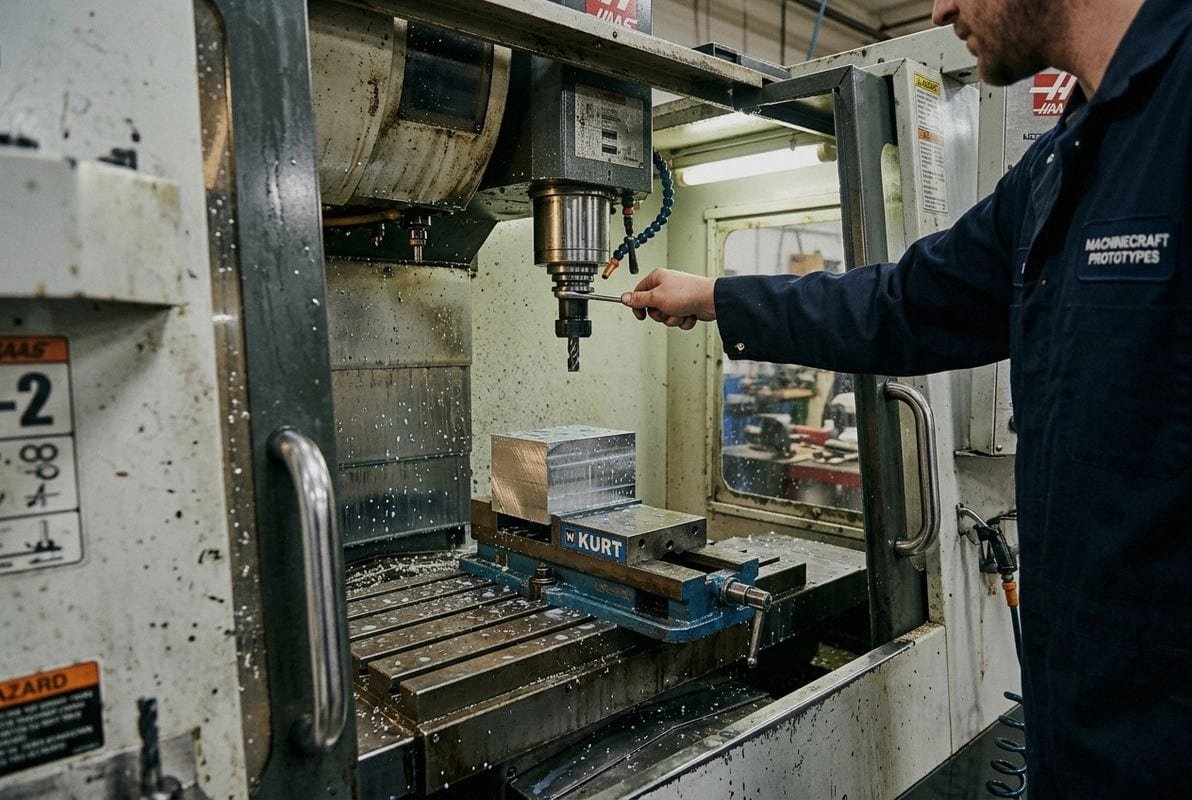
Why prototypes hide manufacturing problems
During rapid prototyping, our machinists accept manual tool changes, custom soft jaws, and one-off fixturing. They can hand-deburr edges and tweak feeds in real time. None of that scales. What works for five parts falls apart at five hundred.
Here is what I tell every buyer before they lock a design: prototyping should be fast and flexible — you can tolerate hand tool changes and simple clamping. But mass production must be stable and consistent, which demands standardized programs, dedicated fixtures, and strict process controls.
Common design issues that inflate production cost
| Design Feature | Fine for Prototype? | Problem at Scale | DFM Fix |
|---|---|---|---|
| Deep internal pocket with sharp corners | Yes — single part, slow feed | Tool wear, long cycle time | Add corner radii ≥ tool diameter |
| Tolerance of ±0.005 mm on non-critical surface | Yes — easy to hit once | Requires constant measurement, slows output | Relax to ±0.02 mm where function allows |
| Thin wall < 0.5 mm | Yes — careful machining | Vibration, deflection, high scrap rate | Increase to ≥ 1.0 mm or add ribs |
| Multiple setups (4+ re-clampings) | Yes — operator manages alignment | Cumulative positional error, labor cost | Redesign for 2-setup machining or 5-axis |
| Exotic material (e.g., titanium, PEEK) | Yes — small stock easy to source | Long lead time, high tool cost at volume | Evaluate if aluminum or POM meets the spec |
How to validate production readiness
I recommend a three-step check before scaling up:
-
Run a DFM review. Send your 3D file and 2D drawing to the shop. A good contract manufacturing partner will flag features that drive cost or risk at volume. Our team provides this feedback within 24 hours of receiving files.
-
Order a pilot batch (10–30 pieces). This is not the same as a prototype. A pilot batch should use the same fixtures, programs, and inspection plan you would use for the full run. It tests the manufacturing process selection, not just the part geometry.
-
Compare pilot-batch data to your spec. Look at Cpk values, dimensional trends, and surface finish consistency. If the pilot drifts, the full run will drift more.
The product development lifecycle connection
Smart buyers treat CNC prototyping as a functional testing phase — using production-grade materials to validate mechanical performance, fit, and thermal behavior. That data then feeds back into DFM improvements before committing to expensive tooling for injection molding or die casting. Skipping this step is how projects end up with $20,000 molds that produce parts nobody can assemble.
Should I work with a single CNC shop that handles both rapid prototyping and large-scale manufacturing?
Last quarter, a buyer from the Middle East split his order between two vendors — prototypes from one shop, production from another. The production shop couldn't replicate the prototype dimensions. Different machine brands, different tooling philosophies, different measurement equipment. He lost six weeks and had to re-qualify the parts from scratch.
Working with a single CNC shop for both prototyping and production reduces transition risk, keeps process knowledge in one place, and shortens lead time. The key qualification is whether that shop has the capacity, equipment range, and quality systems to handle both low-volume flexibility and high-volume consistency.
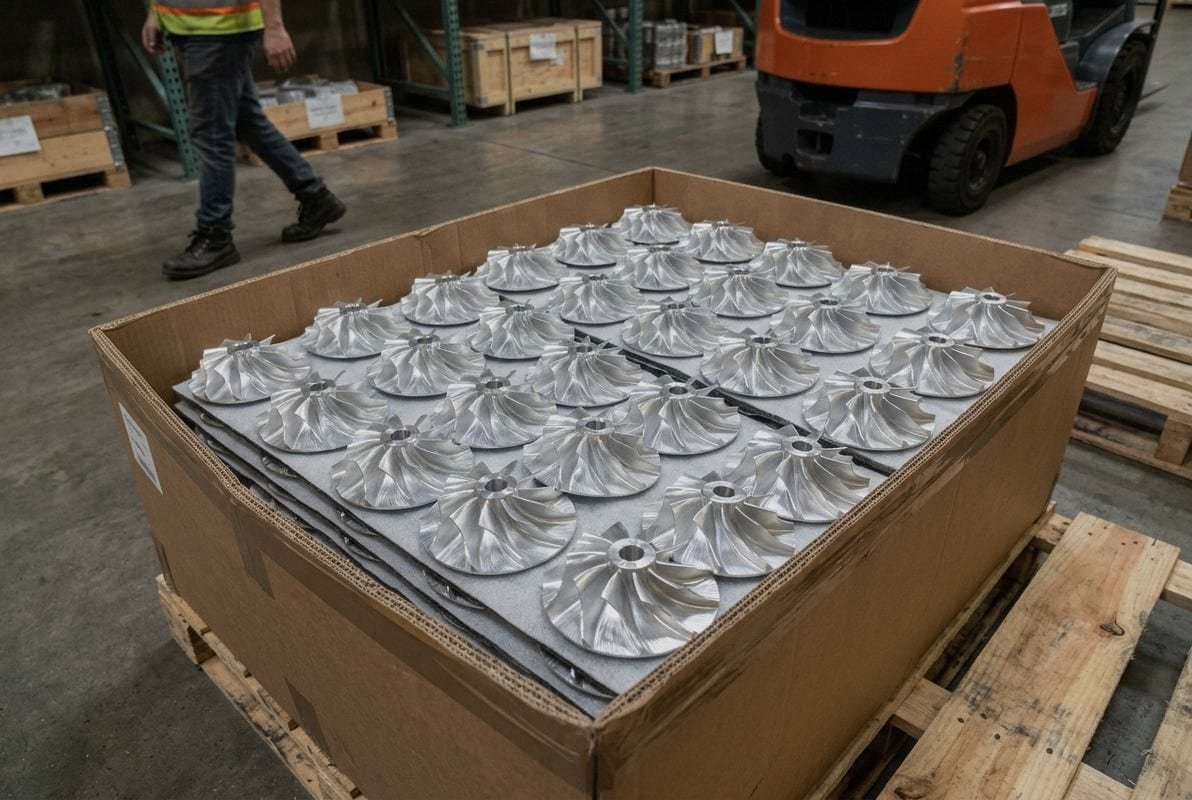
The case for a single supplier
When we machine a prototype on our 5-axis center 7 and later scale to batch production on the same platform, the G-code, toolpath strategy, and datum references carry over directly. There is no translation loss. The inspection baseline from the prototype becomes the production control plan. This continuity is what procurement professionals call "process maturity" — and it matters far more than sample appearance or initial unit price.
Prototyping can accelerate product cycles by roughly 32% compared to traditional development methods. That speed advantage evaporates if you have to re-validate at a new shop.
The case for splitting suppliers
There are legitimate reasons to use separate vendors:
- Your prototype needs 5-axis capability, but your production volumes justify a high-speed 3-axis cell at a lower-cost shop.
- You want supply chain resilience 8 — multiple vendors reduce single-point-of-failure risk.
- The prototype shop is domestic (fast iteration) while the production shop is overseas (lower cost).
Decision framework
| Factor | Single Supplier | Split Suppliers |
|---|---|---|
| Process continuity | High — same machines, programs, fixtures | Low — must re-qualify and re-validate |
| Communication overhead | Low — one point of contact | Higher — coordinating two teams |
| Lead time for first production run | Shorter — no transition gap | Longer — new shop must ramp up |
| Supply chain resilience | Lower — single point of failure | Higher — diversified risk |
| Cost optimization | Good for low-to-mid volumes | Potentially better at very high volumes with specialized shops |
| IP protection | Easier to manage with one NDA | More exposure; requires thorough vetting of both vendors |
What to look for in a dual-capability shop
Not every prototype shop can handle production, and not every production house can iterate quickly. When vetting a single partner, check for:
- Equipment range: 3-axis, 4-axis, and 5-axis machines, plus turning centers. Can they handle your geometry at both one piece and one thousand?
- Quality certification: ISO 9001:2015 9 is the baseline. Ask for their inspection workflow — do they use CMM, optical measurement, or only calipers?
- Capacity buffer: A 10-person shop running at 100% utilization cannot absorb a rush prototype while running your production order. Ask about scheduling flexibility.
- DFM capability: Can they review your drawings and suggest manufacturing process improvements before you commit to a run? This is a strong signal of engineering depth.
Our team in Dongguan handles exactly this transition daily. We prototype with rapid turnaround — sometimes as short as five days — and then scale using the same fixtures and programs. That continuity is what keeps tolerances locked in and costs predictable.
How can I ensure my tolerances remain consistent when scaling from one sample to thousands of units?
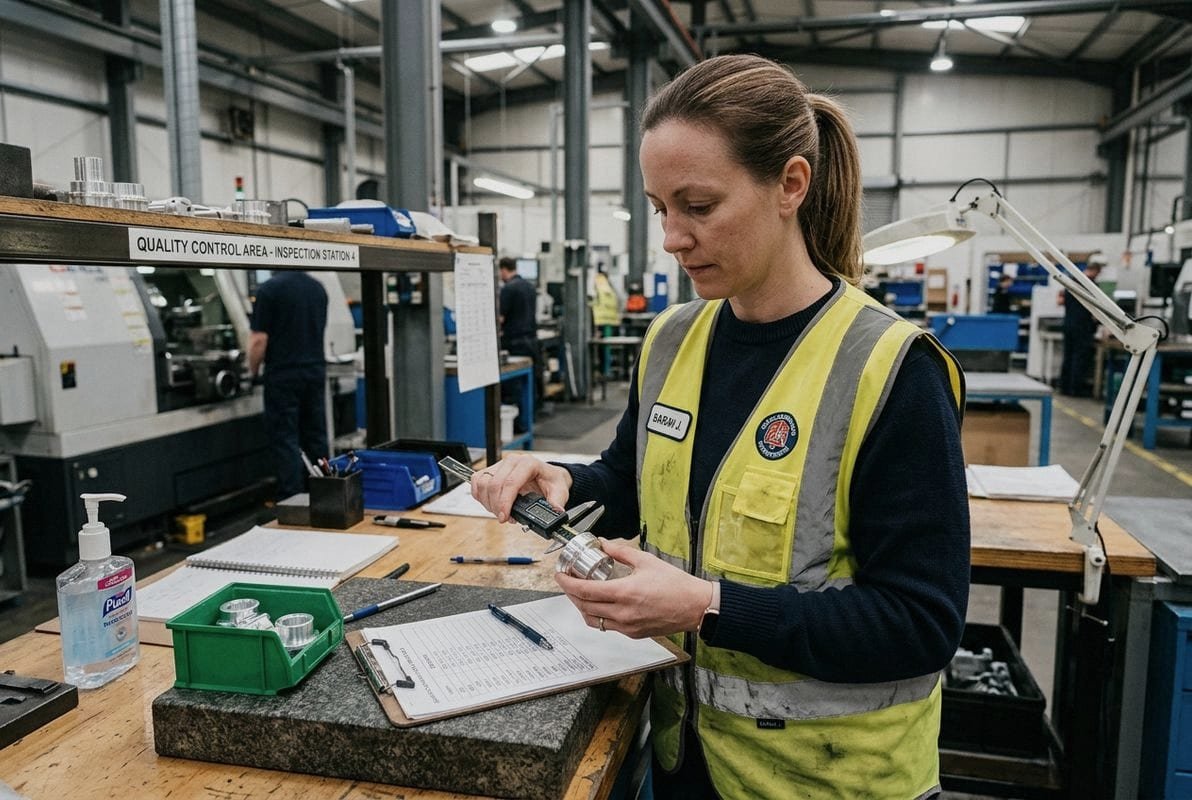
The tightest tolerance we regularly hold is ±0.005 mm. Hitting that on a single sample is straightforward — our machinist monitors the cut, measures mid-process, and compensates in real time. Holding it across 2,000 units over three weeks? That requires a completely different system.
Consistent tolerances at scale require standardized CNC programs, dedicated fixtures, statistical process control (SPC), thermal management, regular tool-life monitoring, and in-process inspection. A single good sample proves capability; only a controlled production process proves repeatability.
Why tolerances drift at volume
Several factors push dimensions off-target during long production runs:
- Tool wear. A carbide end mill cuts slightly differently after 200 parts than it did on part number one. Without scheduled tool changes, dimensions creep.
- Thermal expansion. Machines warm up over hours. Spindle growth, bed expansion, and coolant temperature shifts all affect positioning.
- Fixture variation. If parts are not located and clamped identically every cycle, positional accuracy suffers.
- Material lot differences. Two batches of 6061-T6 from different mills can machine slightly differently — hardness, grain structure, and residual stress vary.
The prototype-to-production control plan
Here is the process we follow when transitioning from sample approval to full-run manufacturing:
Step 1: Lock the CNC program
After the prototype is approved, we freeze the G-code. No ad-hoc edits on the shop floor. Any program change goes through engineering review and triggers a first-article re-inspection.
Step 2: Build dedicated fixtures
Prototype fixtures are often quick-and-dirty — soft jaws, manual vises, maybe a simple plate. For production, we design and machine hardened fixture sets that locate the part on the same datum every cycle. This alone eliminates the largest source of positional scatter.
Step 3: Establish SPC checkpoints
We measure critical dimensions at defined intervals — typically every 20th or 50th part, depending on tolerance class. Data goes into a control chart. If a dimension trends toward a control limit, we intervene before it goes out of spec.
Step 4: Manage thermal and tool variables
Machines run a warm-up cycle before production starts. Coolant temperature is monitored. Tool life is tracked by cut time, not by feel. When a tool reaches its limit, it is replaced — not pushed for "just a few more parts."
Step 5: Document everything
Each production lot ships with a dimensional inspection report, material certificate, and surface finish record. Buyers like our U.S. customers need this documentation for their own incoming quality checks and audit trails.
What tolerances are realistic at volume?
| Tolerance Class | Achievable in Prototype? | Achievable at 1,000+ Units? | Notes |
|---|---|---|---|
| ±0.1 mm | Yes | Yes — standard CNC capability | No special measures needed |
| ±0.02 mm | Yes | Yes — with SPC and fixture control | Requires dedicated fixturing and regular inspection |
| ±0.01 mm | Yes | Yes — with process maturity | Needs thermal management, tool-life control, CMM verification |
| ±0.005 mm | Yes | Possible but costly | Requires grinding, lapping, or very slow finishing passes; high inspection burden |
The honest takeaway: do not specify ±0.005 mm everywhere. Apply tight tolerances only where function demands it. Relaxing non-critical surfaces from ±0.01 to ±0.05 mm can cut cycle time by 15–20% and dramatically reduce scrap. For guidance on specifying the right tolerance for each feature, see our article on choosing the right CNC machining tolerances.
The supplier question that matters most
When you evaluate a CNC machining supplier for high volume production, the right question is not "Can you make one good sample?" It is "What systems do you have to keep the 5,000th part identical to the 1st?" Ask for their SPC data, fixture photos, and tool-change protocols. If they cannot show you these, the prototype price means nothing.
Záver
Choosing between CNC prototyping and mass production is not a binary switch — it is a spectrum shaped by volume, tolerance, timeline, and supplier capability. Use the frameworks, tables, and checklists above to make sourcing decisions that protect both your budget and your product quality.
Footnotes
1. HTTP 404 ↩︎
2. Provides a comprehensive overview of the injection molding process and its applications. ↩︎
3. Defines thermal expansion and explains how temperature changes affect material dimensions. ↩︎
4. Explains the process and applications of CNC machining, including prototyping. ↩︎
5. Explains additive manufacturing, commonly known as 3D printing, and its principles. ↩︎
6. HTTP 405 ↩︎
7. Describes 5-axis machining technology and its advantages in complex part manufacturing. ↩︎
8. Discusses the importance of supply chain resilience in mitigating disruptions and risks. ↩︎
9. Provides official information about the ISO 9001:2015 quality management system standard. ↩︎
10. Explains the principles and benefits of statistical process control in manufacturing quality. ↩︎

 Slovenčina
  English
  Italiano
  Français
  日本語
日本語  Deutsch (Sie)
  Español
  Русский
  العربية
  Български
  Čeština
  Dansk
Dansk  Suomi
Suomi  עִבְרִית
  हिन्दी
  Nederlands
  Português
  Română
  Svenska
  ไทย
ไทย  Tiếng Việt
  Türkçe
  Slovenščina