
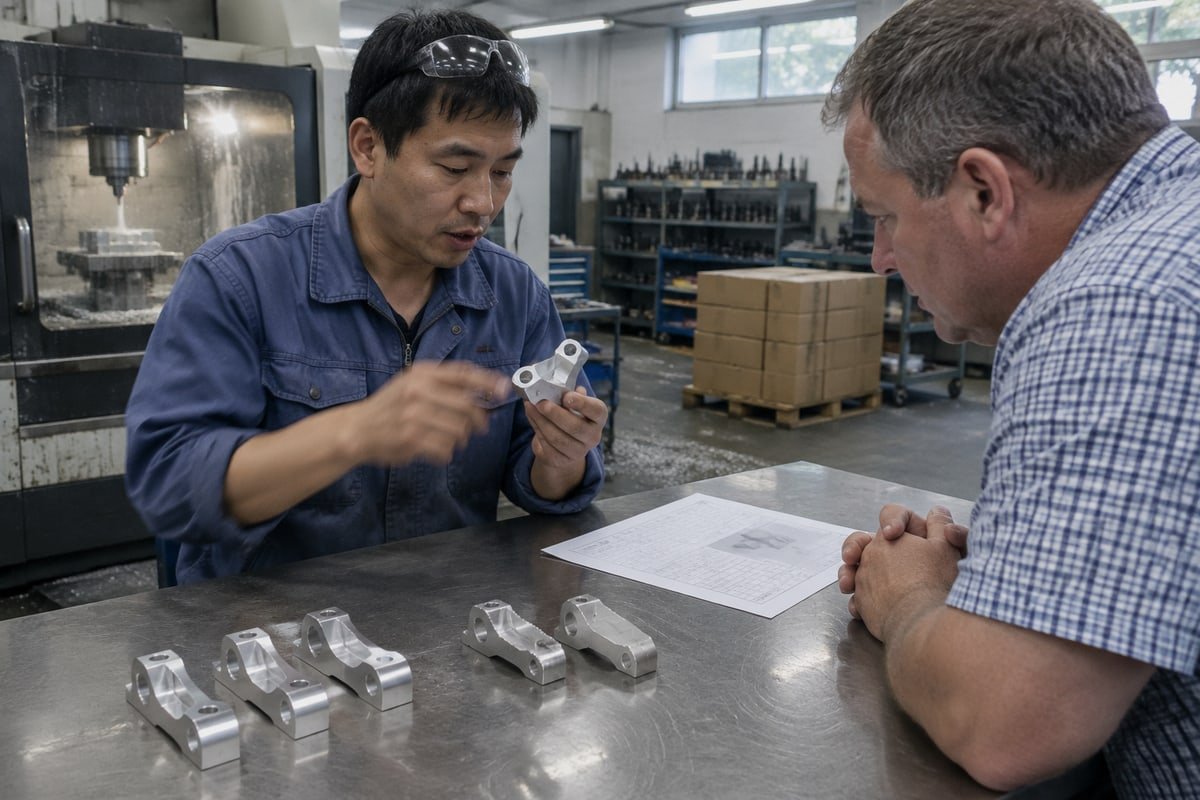
Last month, a buyer sent our engineering team photos of a scrapped batch from his previous supplier. Finding a [reliable automotive CNC machining manufacturer](https://stcncmachining.com/?p=15429) should not be this painful.
To find a reliable automotive CNC machining manufacturer, verify certifications such as IATF 16949 or ISO 9001, review CMM inspection reports and capability data, confirm proven experience with your material and tolerances, run a small prototype order, and inspect results before committing to volume production.
That is the short answer. The longer answer is a step-by-step vetting process. I will walk you through it below, based on what I see work — and fail — every week on our shop floor in Dongguan.
How do I evaluate an automotive CNC machining manufacturer's quality control process?
Our CMM once caught a 0.015 mm drift in a bracket batch before shipment. That single catch shaped how I judge every quality control process today.
Evaluate a manufacturer's quality control by checking in-process inspection frequency, CMM and SPC usage, First Article Inspection reports, material traceability, and calibration records. A mature shop documents every checkpoint and can prove stable dimensional control across batches, not just on the first sample.
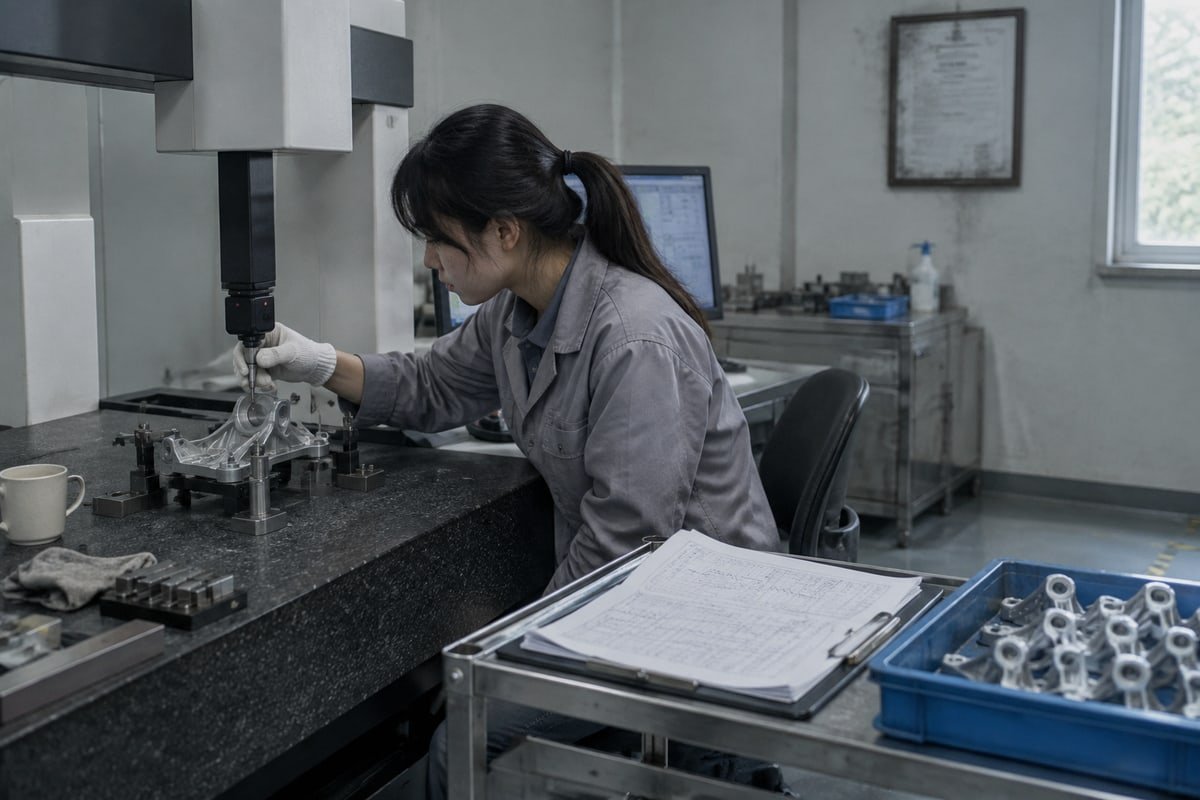
Here is the core point I want you to take away, and it comes directly from my own experience: stable dimensional control is the priority. A machine that hits a spec once is common. A process that holds it for thousands of parts is rare. So when you evaluate a quality system, look for evidence of consistency, not one-off precision.
Many buyers assume a thorough final inspection is enough. It is not. Final inspection finds bad parts after they exist. By then, an entire batch may already show drift from tool wear or thermal changes. In-process inspection catches that drift while there is still time to correct it. That is why our operators check critical dimensions during production, not only at the end.
The checkpoints that actually matter
Ask every candidate supplier to walk you through their quality control standards at each stage. Then request the documents behind them.
| Checkpoint | What it covers | What to ask for |
|---|---|---|
| Incoming material | Alloy grade, heat treatment state | Material certificates, traceability records |
| First Article Inspection | Full dimensional check of first part | FAI report tied to your drawing |
| In-process inspection | Critical dimensions during the run | Inspection frequency plan, SPC charts |
| Final inspection | CMM verification before packing | Outgoing inspection report per batch |
| Calibration | Gauge and CMM accuracy | Current calibration certificates |
A supplier who can produce these documents quickly runs a real system. A supplier who stalls is improvising. In our factory, these records are part of every automotive job, because buyers in Germany and the US expect them for internal acceptance.
What certifications should I look for when choosing an automotive CNC machining supplier?
A German procurement manager once opened our first call with one question: which certificates can you actually show me? He was right to ask it first.
Look for IATF 16949 certification for automotive serial production and ISO 9001:2015 as the minimum quality baseline. Depending on your parts, also request material certificates, PPAP documentation, and environmental credentials like ISO 14001, especially for EV programs demanding low-carbon aluminum.
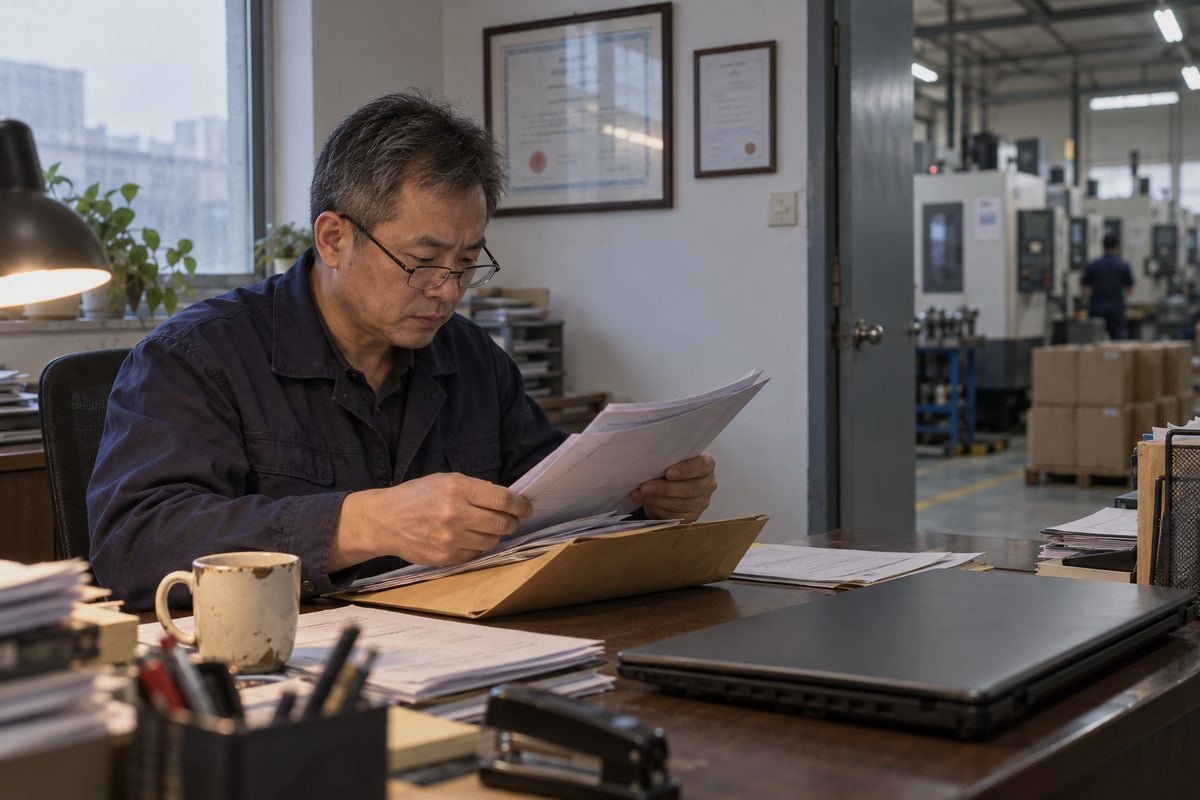
Certifications tell you whether a supplier's paperwork matches their promises. But buyers often ask me a fair objection: is IATF 16949 mandatory for every automotive order? The honest answer is no. It depends on where your part sits in the supply chain and at what volume.
If you supply an OEM or Tier 1 program in serial production, IATF 16949 certification 1 is treated as the baseline across the global automotive chain. If you are buying prototypes, aftermarket parts, test rigs, or low-volume production, an ISO 9001:2015 2 certified factory with strict inspection discipline is often acceptable. Our own facility runs on ISO 9001:2015, and we support automotive buyers with FAI reports, material certificates, and PPAP-style documentation when their internal process requires it. What matters is matching the credential to the job, not collecting logos.
What each credential actually proves
| Credential | What it proves | When you need it |
|---|---|---|
| IATF 16949 | Automotive-specific quality management for serial production | OEM and Tier 1 supply chains, high-volume programs |
| ISO 9001:2015 | General quality management system baseline | Prototypes, low-volume, industrial and aftermarket parts |
| Material certificates | Correct alloy grade and heat treatment | Every automotive job, no exceptions |
| PPAP documentation | Part and process approved before production | Serial production launches and customer sign-off |
| ISO 14001 / ESG data | Environmental management, carbon footprint | EV programs requiring low-carbon aluminum or recycling loops |
One more warning. Ask for the actual certificate, check the expiry date, and confirm the certified legal entity matches the company quoting you. Outdated or borrowed certificates are a real problem in low-cost sourcing regions.
How can I verify a manufacturer's experience with automotive precision parts and tight tolerances?
Every quote forces a trade-off in my head: the tolerance a machine can hit once versus the tolerance our process can hold across five thousand parts.
Verify experience by requesting First Article Inspection reports, Cpk capability studies for critical features, and sample parts in your exact material. Ask about 5-axis equipment, past automotive projects, and batch inspection data proving the shop holds precision tolerances consistently, not occasionally.
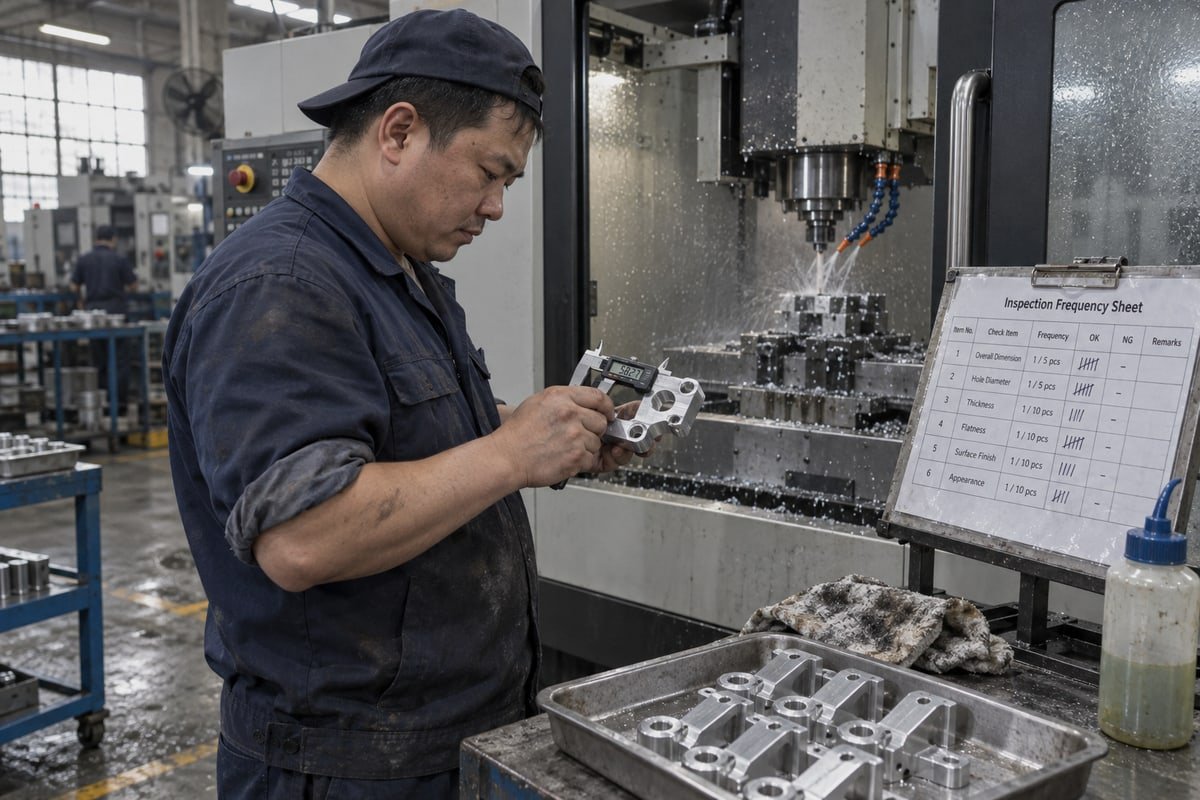
Claims are cheap. Evidence is not. Any supplier can write ±0.005 mm on a website. On our 5-axis CNC milling centers we work at tolerances of 0.01 to 0.005 mm, and I can tell you from twenty-plus years of experience that holding that band repeatedly is a process achievement, not a machine spec. This is why my core advice never changes: judge suppliers on stable, repeatable dimensional control above everything else.
Here is the verification sequence I recommend to every buyer who contacts us:
- Request evidence, not promises. Ask for documented capability studies and Cpk data on critical features from past jobs. A shop that runs SPC will have this on file.
- Match the material. Machinability and tolerance behavior change with material selection. Aluminum 6061 moves differently than 316 stainless or PEEK. Ask for sample parts and inspection reports in your exact alloy and heat treatment state.
- Check the equipment against your geometry. Complex automotive parts — manifolds, sensor housings, turbocharger components — often need 5-axis capability. Confirm the machine list matches your part, not just the brochure.
- Ask about simulation. Advanced shops use digital twin machining simulation to predict deflection, chatter, and structural issues before cutting. It is a strong signal of engineering depth.
- Order a pilot run. Use rapid prototyping services for a small batch, then inspect every part against the drawing yourself before scaling.
A supplier who welcomes this process is confident. A supplier who resists it is telling you something important.
What questions should I ask before placing my first order with a CNC machining manufacturer?
I learned the hard way that unasked questions become expensive surprises. Early in our export business, one skipped question about packaging cost a client two weeks of rework.
Before ordering, ask about tolerance capability evidence, inspection documentation, material sourcing and traceability, in-house versus outsourced surface finishing, production capacity headroom, lead time guarantees, tooling ownership, IP protection, and how the supplier manages the transition from prototype to full production.
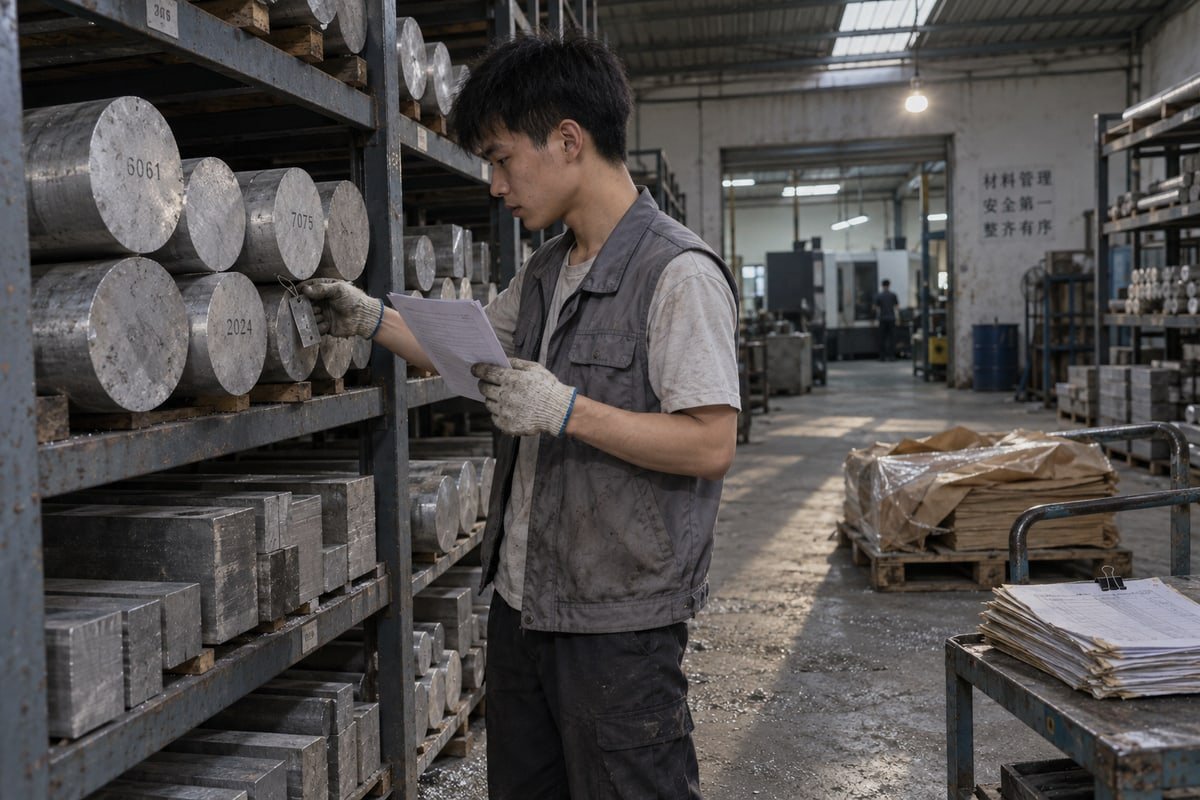
The RFQ stage is your best free audit. How a supplier answers questions before money changes hands predicts how they will behave when a problem appears mid-production. When buyers send us drawings, our engineers respond with DFM feedback and clarifying questions — and honestly, that is what you should demand from anyone. An instant quote with zero technical questions on a difficult part is a red flag, not a convenience. Some platforms now use AI-integrated DFM tools at the RFQ stage, which helps, but you still need a human engineer confirming the tricky details: threads, hole positions, and assembly relationships.
The question checklist I would use as a buyer
| Category | Key questions | Green flag answer |
|---|---|---|
| Quality | Can you share FAI reports and Cpk data? What are your quality control standards per batch? | Documents provided within days, CMM reports standard |
| Schopnosti | Do you have 5-axis capacity? Have you machined this material before? | Specific past examples in your alloy and geometry |
| Capacity | What is your production capacity headroom if my volume doubles? | Clear utilization numbers and ramp-up plan |
| Finishing | Are anodizing, plating, and passivation in-house or outsourced? Which surface finishing options do you control directly? | Transparent answer with named process partners |
| Delivery | What is your lead time reliability record? What happens if the schedule slips? | Defined windows, proactive delay communication |
| Commercial | Who owns the tooling? How is my IP protected? What does landed cost include? | Written tooling and NDA terms, all-in pricing |
| Risk | How do you source raw material? Do you have multi-regional supply options? | Multiple vetted material suppliers, continuity plan |
Two more points deserve emphasis. First, compare total landed cost — freight, duties, inspection, and rework risk — not just the piece price. A cheap quote that fails FAI is the most expensive quote you will ever accept. Second, ask how the supplier moves from prototype to volume. In our workflow, that path runs from rapid prototyping in as little as five days, through pilot batch inspection, into mass production with the same fixtures and inspection plan. If a supplier cannot describe that transition clearly, the prototype price is irrelevant.
Záver
Choosing a reliable automotive CNC machining manufacturer is risk management, not price shopping. Verify certifications, demand capability evidence, test with a pilot run — then scale with confidence.
Footnotes
1. Official oversight body for the IATF 16949 automotive quality management standard. ↩︎
2. Official ISO page for the world’s most recognized quality management system standard. ↩︎

 Slovenčina
  English
  Italiano
  Français
  日本語
日本語  Deutsch (Sie)
  Español
  Русский
  العربية
  Български
  Čeština
  Dansk
Dansk  Suomi
Suomi  עִבְרִית
  हिन्दी
  Nederlands
  Português
  Română
  Svenska
  ไทย
ไทย  Tiếng Việt
  Türkçe
  Slovenščina