
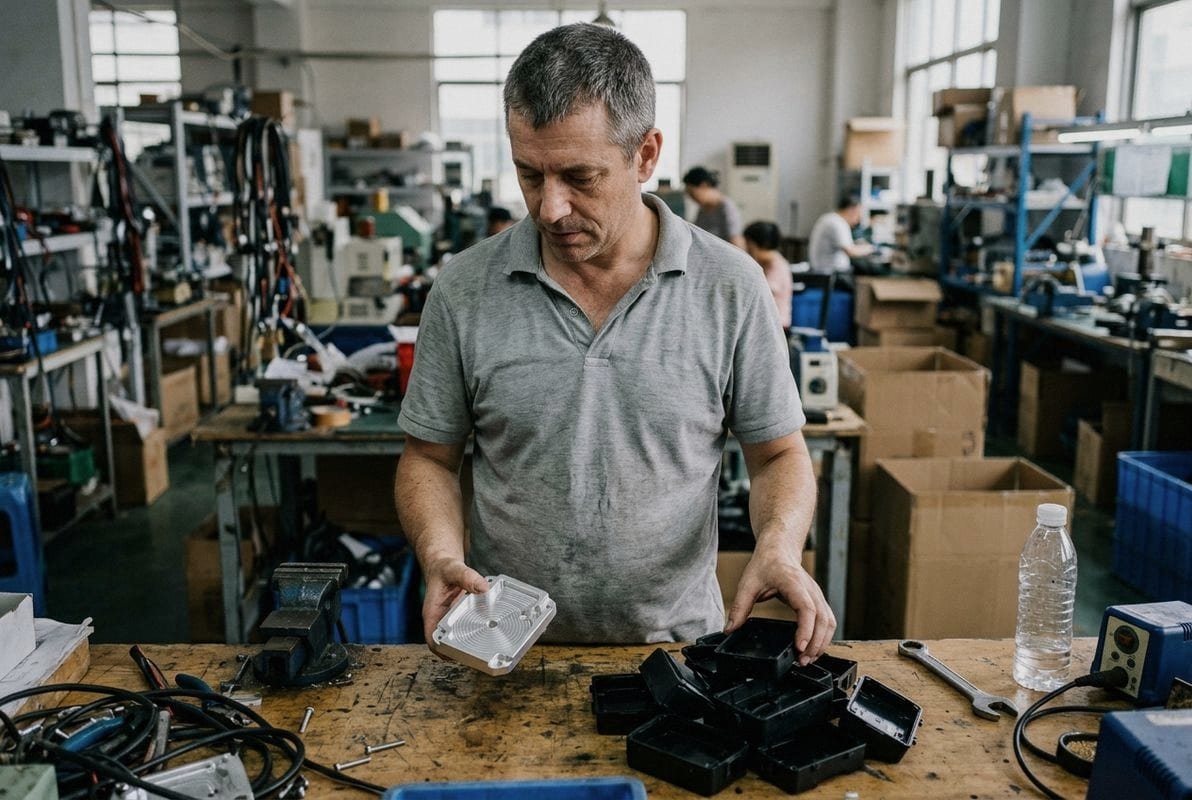
Every week, our engineering team fields the same question from buyers: should I go with CNC machining 1 or injection molding for this project? The wrong choice can blow your budget, delay your launch, or lock you into a process that doesn’t scale — and the frustration only grows when you’re already behind schedule. After running both a CNC machining shop and an injection molding 2 facility from our Dongguan headquarters for over 20 years, we’ve helped hundreds of clients navigate this exact decision.
CNC machining vs. injection molding comes down to volume, precision, and timeline. CNC machining is best for low-volume, high-precision parts with design flexibility, while injection molding excels at high-volume production of plastic parts with the lowest per-part cost once tooling is complete.
The sections below break this decision into four practical dimensions: production volume, precision requirements, delivery speed, and material-plus-design complexity CMM 3. Each section includes real data, tables, and the trade-offs we discuss with buyers every day.
How do I determine if my production volume makes CNC machining more cost-effective than injection molding?
A procurement manager from Ohio recently asked us to quote the same aluminum bracket at 150 units and again at 5,000 units Uniform wall thickness 4. The cost difference between the two methods was dramatic — and it all came down to where tooling costs get absorbed.
For 1 to 300 parts, CNC machining is almost always more cost-effective because it requires zero tooling investment. Once volumes exceed 500 units, injection molding’s high upfront mold cost gets spread across enough parts to drive the per-part cost far below CNC levels.
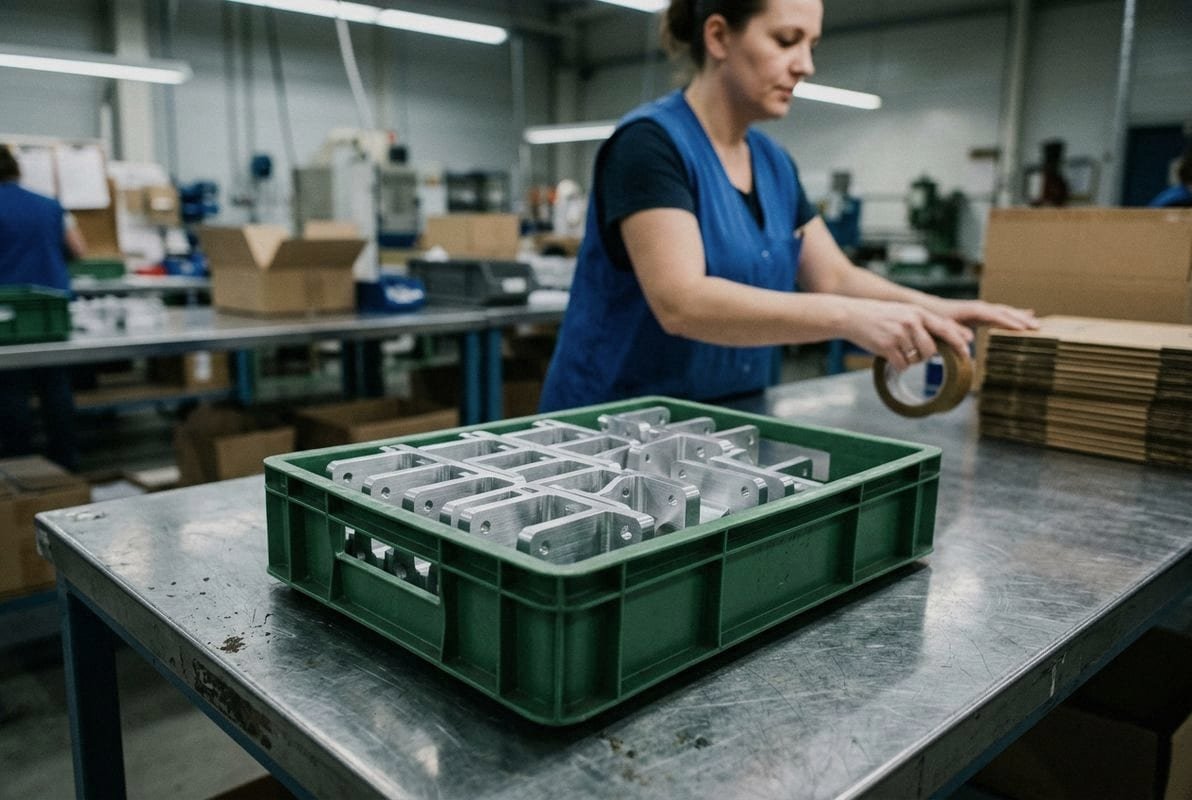
Understanding the Cost Structures
CNC machining is a subtractive manufacturing process 5. A cutting tool removes material from a solid workpiece — metal, plastic, or composite — one part at a time. There is no dedicated mold. You pay for machine time, programming, and material per piece. The per-part cost stays relatively flat whether you order 10 or 300 parts.
Injection molding works differently. You pay a large sum upfront — often $1,000 or more for a simple aluminum mold, and significantly more for a hardened steel mold — before a single part is produced. Once the mold exists, molten plastic is injected into the cavity, cooled, and ejected in seconds. The per-part cost drops dramatically as volume increases because tooling costs are amortized across every unit.
The Volume Decision Matrix
Here is the framework we share with our clients:
| Volumen de producción | Recommended Process | Why |
|---|---|---|
| 1 – 50 parts | Mecanizado CNC | No tooling cost; maximum design flexibility; fast turnaround |
| 50 – 300 parts | Mecanizado CNC | Still cheaper overall; mold cost cannot be justified |
| 300 – 500 parts (simple geometry) | Either / Evaluate | Injection molding becomes competitive if the mold is simple |
| 500 – 2,000 parts | Injection Molding | Mold cost is amortized enough to beat CNC per-part cost |
| 2,000+ parts | Injection Molding | Significantly lower total cost; high-volume production advantage |
A Quick Cost Comparison Example
Let's walk through a hypothetical project. Imagine a simple plastic housing part.
| Cost Factor | Mecanizado CNC | Injection Molding |
|---|---|---|
| Tooling / Mold Cost | $0 | $3,000 (aluminum mold) |
| Per-Part Cost | $15 | $0.80 |
| Total Cost at 100 parts | $1,500 | $3,080 |
| Total Cost at 500 parts | $7,500 | $3,400 |
| Total Cost at 2,000 parts | $30,000 | $4,600 |
At 100 parts, CNC machining saves you over $1,500. At 500 parts, injection molding is already half the price. At 2,000 parts, the gap is enormous. The break-even point in this example sits around 200–250 parts. The exact number shifts based on part complexity and material, but the pattern holds.
Our Practical Advice
We run both processes in-house, so we don't push one method over the other. When a client's order is below 300 pieces, we almost always recommend CNC. When quantities climb above 500 and the design is stable, we guide them toward injection molding. For orders that might grow over time, we suggest starting with CNC for the first batch, then investing in a mold once the design is validated. This hybrid approach saves money and avoids the costly mistake of building a mold for a part that still needs design changes.
Can I achieve tighter tolerances and higher precision for my complex parts with CNC machining?
One lesson we learned early is that tolerance specs on paper mean nothing if the process can't hold them in production. A medical device client once sent us a part requiring ±0.005 mm on a critical bore diameter. We ran it on our 5-axis CNC machine 6, measured it with a CMM, and delivered first articles within spec. That same geometry would have been extremely difficult to hold in a molded plastic part.
Yes. CNC machining delivers tighter tolerances — as low as ±0.005 mm (±0.001″) — and superior surface finishes directly off the machine. Injection molding typically holds ±0.076 mm (±0.003″), which is sufficient for many plastic parts but not for high-precision metal components.
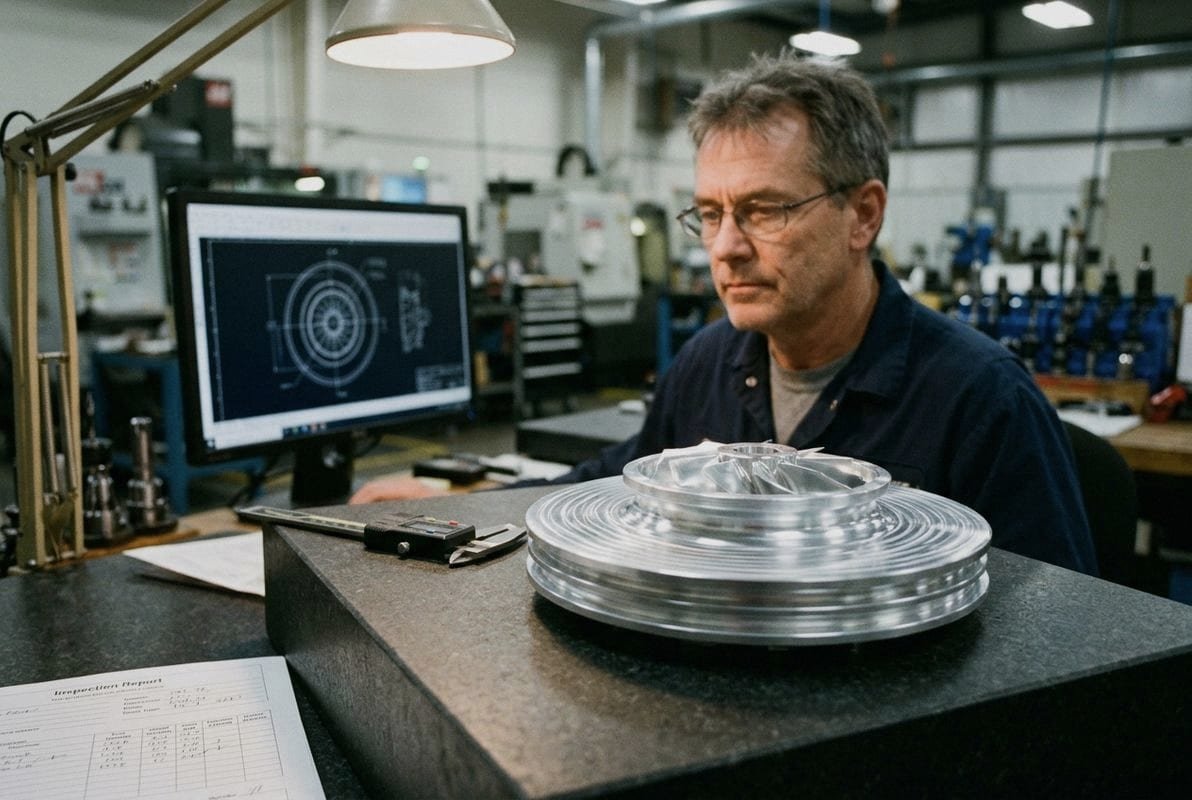
Precision Capabilities Side by Side
CNC machining is inherently precise. The cutting tool follows a CAM-programmed path with micro-level accuracy. Modern CNC centers equipped with 3-axis, 4-axis, and 5-axis capabilities can achieve tolerances that injection molding simply cannot match.
Injection molding's precision depends heavily on the mold itself. Factors like shrinkage during cooling, gate placement, and material flow all introduce variability. Skilled mold designers can minimize these effects, but the physics of molten plastic cooling inside a cavity set a practical floor on achievable tolerances.
| Precision Factor | Mecanizado CNC | Injection Molding |
|---|---|---|
| Standard Tolerance | ±0.01 mm (±0.0004") | ±0.076 mm (±0.003") |
| Best Achievable Tolerance | ±0.005 mm (±0.0002") | ±0.05 mm (±0.002") with premium tooling |
| Surface Finish (Ra) | 0.8 – 3.2 µm, controllable | Depends on mold polish; may need post-processing |
| Part-to-Part Consistency | Very high (each part is individually machined to spec) | Very high once mold is dialed in |
| Material Impact on Precision | Metals hold tighter tolerances than plastics | Shrinkage rates vary by resin type |
When Tight Tolerances Matter
If you're sourcing metal components for aerospace assemblies, optical instruments, or medical devices, CNC machining is the clear choice. These industries demand tight tolerances that injection molding cannot reliably deliver.
For consumer electronics housings or general-purpose plastic parts, injection molding's ±0.003" tolerance is often more than adequate. The key question is: does your application truly need ±0.001", or is ±0.003" good enough?
Surface Finish Considerations
Our CNC machines produce controlled surface finishes directly. We can achieve Ra 0.8 µm on aluminum without secondary operations. Injection-molded parts can look excellent, but the surface quality mirrors the mold cavity. A highly polished mold produces glossy parts. A textured mold produces textured parts. Any imperfection in the mold transfers to every single part. Repairing or re-polishing a mold adds cost and lead time.
For parts like the precision-machined impeller wheels and complex geometric components we produce regularly, CNC machining gives us full control over every surface and every dimension. Injection molding would require extremely expensive mold work — and still might not match the same precision on critical features.
Which process will help me get my custom parts delivered faster to meet my project deadlines?
A buyer once told us he needed 50 prototype housings in his hands within two weeks. His original supplier quoted him six weeks because they assumed injection molding. When we proposed CNC machining the parts from solid plastic blocks, we shipped them in eight business days. Speed depends on where you are in the product lifecycle.
CNC machining delivers parts faster for prototypes and low-volume orders, with manufacturing lead times as short as 5 to 15 business days. Injection molding requires 3 to 5 weeks for mold fabrication before any parts ship, but once the mold is ready, it produces thousands of parts per day.
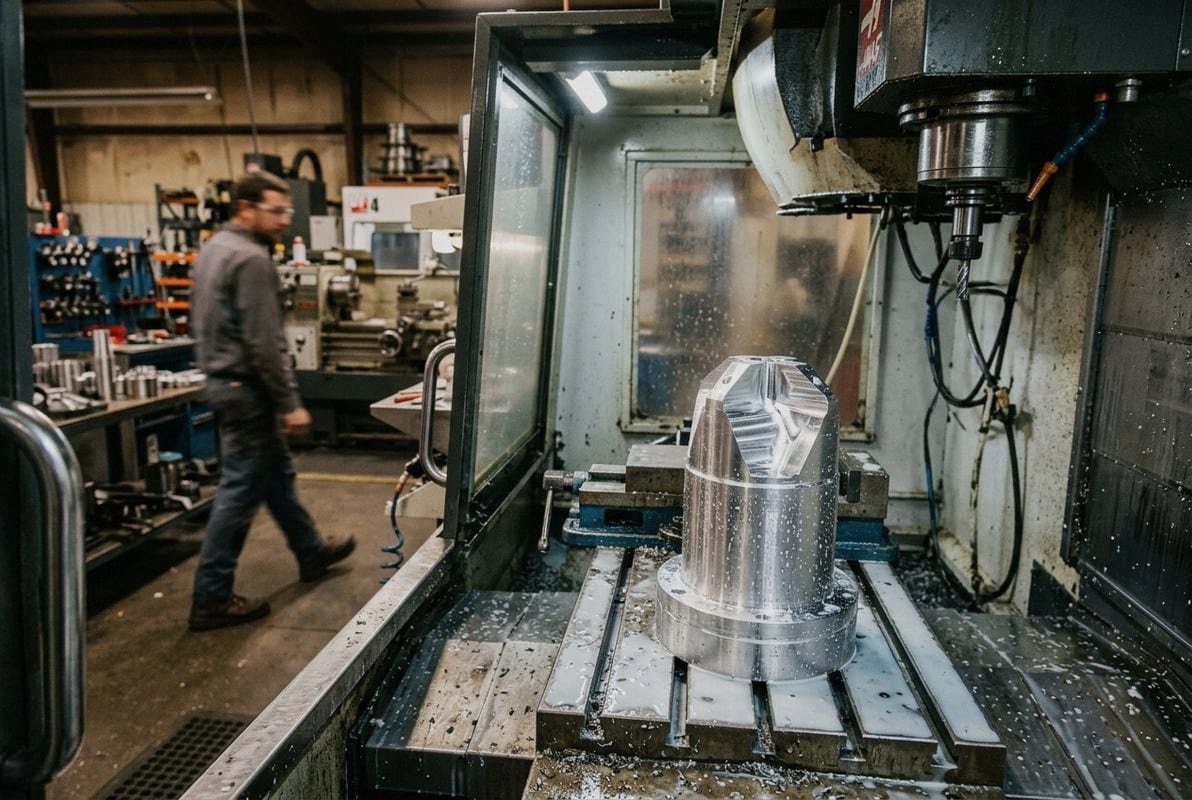
Lead Time Breakdown
The manufacturing lead time question has two layers. The first is how quickly you receive your initial parts. The second is how fast the process runs once it's in production mode.
For initial parts, CNC machining wins every time. There is no mold to design, machine, test, and iterate. Our team receives a CAD file, programs the toolpath, sets up the machine, and starts cutting. For simple parts, we can ship in as few as 5 business days. Complex parts with tight tolerances or special finishes take closer to 2–3 weeks.
Injection molding has a front-loaded delay. The mold must be designed, reviewed (DFM feedback is critical here), CNC-machined from steel or aluminum, polished, tested with trial shots, and adjusted. This process typically takes 3 to 5 weeks. If the trial shots reveal problems — and they often do — add another week or two for modifications.
However, once the mold is approved, injection molding is extraordinarily fast. Cycle times range from seconds to a couple of minutes per part. A single mold can produce hundreds or thousands of parts per day.
A Timeline Comparison for Different Scenarios
Scenario 1: You need 50 prototypes quickly.
CNC machining gets them to you in 1–2 weeks. Injection molding would take 4–6 weeks minimum (mold + production). CNC is the obvious choice for rapid prototyping.
Scenario 2: You need 10,000 plastic parts for a product launch in 8 weeks.
Week 1–4: Mold fabrication. Week 5–6: Trial shots and adjustments. Week 6–7: Full production run (10,000 parts in days). Week 7–8: Quality inspection, packing, shipping. Injection molding meets this deadline. CNC machining 10,000 parts would take months.
Scenario 3: You need 200 parts and your design might change.
CNC machining. Even if the design changes midway, we update the CAM program and keep going. No mold rework, no wasted tooling investment.
Our Delivery Commitment
From our Dongguan facility, we ship to the US, Europe, and the Middle East regularly. For CNC orders, our standard lead time is 1–3 weeks depending on part complexity. For injection molding orders, we quote 3–5 weeks for the mold plus 1–2 weeks for production and shipping. We provide clear timelines upfront — no surprises.
How do my material requirements and design complexity affect my choice between these two manufacturing methods?
When we first started supporting aerospace clients, the material selection conversations changed everything. Those buyers needed titanium, Inconel, and hardened tool steel — materials that injection molding simply cannot handle. On the other hand, our consumer electronics clients often need thousands of identical ABS or polycarbonate housings, which is exactly where injection molding shines.
If your parts require metals, exotic alloys, or engineering-grade composites, CNC machining is your only practical option. If you need high-volume plastic parts with consistent geometry, injection molding is more efficient. Part complexity also matters: CNC handles any machinable shape, while molding requires strict design-for-manufacturing rules.
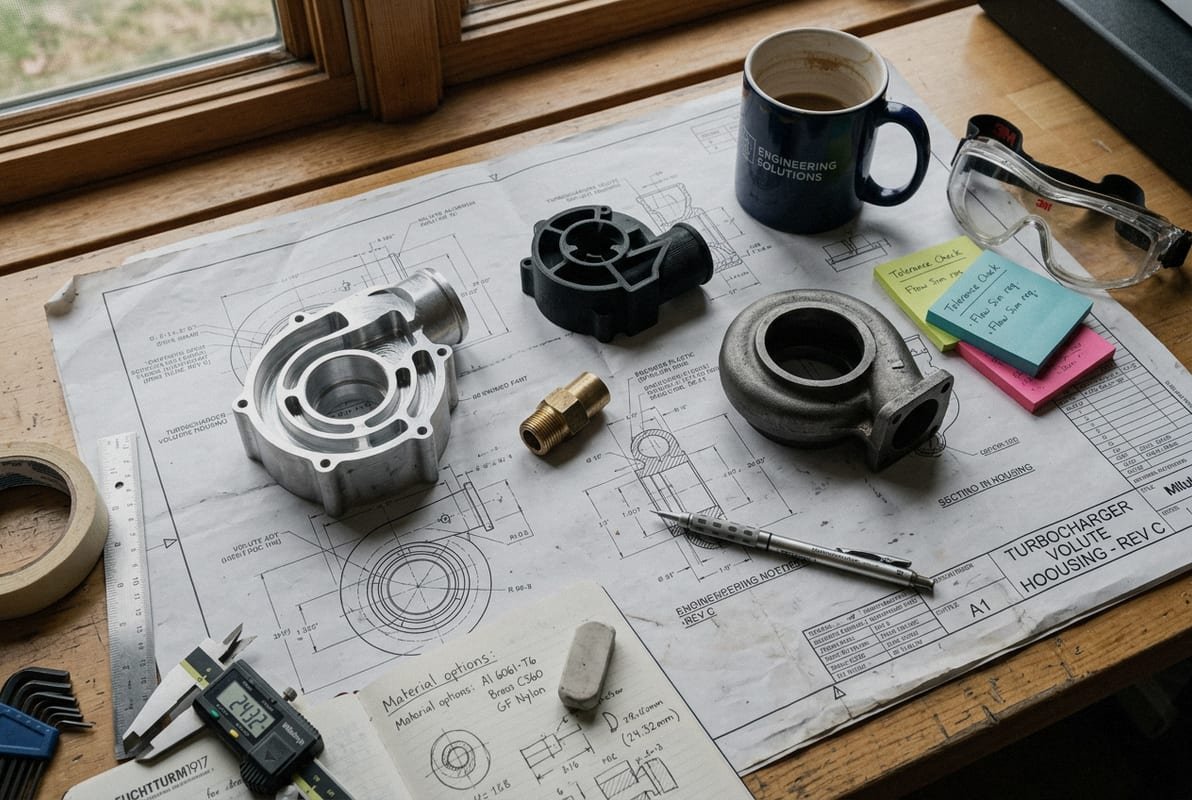
Material Diversity
CNC machining works with nearly any solid material. Our shop regularly machines aluminum (6061, 7075), stainless steel (304, 316, 17-4PH), brass, copper, titanium, tool steel, and a wide range of engineering plastics like ABS, POM, PEEK, nylon, polycarbonate, PPSU, and HDPE. If you can clamp it on the machine, we can cut it.
Injection molding is limited primarily to thermoplastics 7 and some thermosets and elastomers. It excels with materials like ABS, polypropylene, polycarbonate, nylon, and PEEK. It does not work for metal components unless you move into metal injection molding (MIM), which is a different process with its own constraints.
This means material selection alone can make the decision for you. Need aluminum impeller wheels like the ones we produce? CNC machining. Need 5,000 polycarbonate lens covers? Injection molding.
Design Complexity and Constraints
CNC machining offers maximum design flexibility. Our 5-axis machines can reach almost any surface on a part. Undercuts, deep pockets, thin walls, complex curves — all achievable. When a client sends a revised CAD file, we update the toolpath and run the new version on the next cycle. No tooling modifications needed. This makes CNC ideal for iterative development and parts where the design is still evolving.
Injection molding imposes strict design-for-manufacturing (DFM) rules 8:
- Draft angles are required on all vertical walls so the part ejects cleanly from the mold.
- Uniform wall thickness prevents sink marks, warping, and uneven cooling.
- Undercuts require side-action mechanisms in the mold, which increase tooling costs.
- Gate and runner placement affects material flow and can leave visible marks on the part surface.
Changing a molded part's design after the mold is built is expensive. Even a small modification — moving a boss, changing a wall thickness — may require partial or complete mold rework. This is why we always recommend finalizing the design via CNC prototyping before committing to a mold.
Material and Process Decision Guide
| Decision Factor | Choose CNC Machining | Choose Injection Molding |
|---|---|---|
| Material is metal (aluminum, steel, titanium) | ✔ | ✘ |
| Material is common thermoplastic (ABS, PP, PC) | ✔ (low volume) | ✔ (high volume) |
| Material is engineering plastic (PEEK, PPSU) | ✔ | ✔ (if volume justifies mold cost) |
| Design is still evolving | ✔ | ✘ (mold changes are costly) |
| Part has undercuts or complex internal features | ✔ | Possible but increases mold cost |
| Part requires post-machining of critical surfaces | ✔ | Sometimes needed after molding |
| Volume exceeds 1,000 units | Evaluate cost | ✔ |
The Hybrid Strategy We Recommend
Many of our long-term clients use a phased approach. They start with CNC machining for prototyping and early production. This lets them test the design, get market feedback, and make changes quickly. Once the design is locked and volumes justify the tooling investment, they transition to injection molding for mass production. Because we operate both CNC machining and injection molding under one roof, this transition is seamless — the same engineering team manages both phases.
This strategy minimizes risk. You never pay for a mold that needs to be scrapped because of a design change. You only invest in tooling when you're confident the part is final.
Conclusion
Choosing between CNC machining and injection molding is not about which process is universally better. It's about matching the right process to your specific volume, precision, timeline, and material needs — and we're equipped to support both from a single source.
Footnotes
1. Explains CNC machining as an automated manufacturing process controlling machinery via computer. ↩︎
2. Replaced HTTP 404 with an authoritative Wikipedia page on injection molding. ↩︎
3. Explains CMM as a highly accurate tool for determining the geometry of physical objects. ↩︎
4. Highlights uniform wall thickness as crucial for quality, structural integrity, and aesthetics. ↩︎
5. Explains subtractive manufacturing as forming parts by removing material from a solid block. ↩︎
6. Describes 5-axis CNC machines as capable of simultaneous movement along five distinct axes. ↩︎
7. Defines thermoplastics as polymers that can be melted and recast almost indefinitely. ↩︎
8. Explains DFM as designing products with manufacturing in mind to optimize processes. ↩︎
9. Defines draft angle as a taper applied to vertical walls for smooth part ejection. ↩︎

 Español
  English
  Italiano
  Français
  日本語
日本語  Deutsch (Sie)
  Русский
  العربية
  Български
  Čeština
  Dansk
Dansk  Suomi
Suomi  עִבְרִית
  हिन्दी
  Nederlands
  Português
  Română
  Slovenčina
  Svenska
  ไทย
ไทย  Tiếng Việt
  Türkçe
  Slovenščina